- Location
- Kansas
- Current protection
- Tallgrass Prairie National Preserve, Flint Hills National Scenic Byway, Konza Prairie Biological Station
- Status
- No active campaign
- In the book
- Not featured in Undiscovered America
Why should it be a National Park?
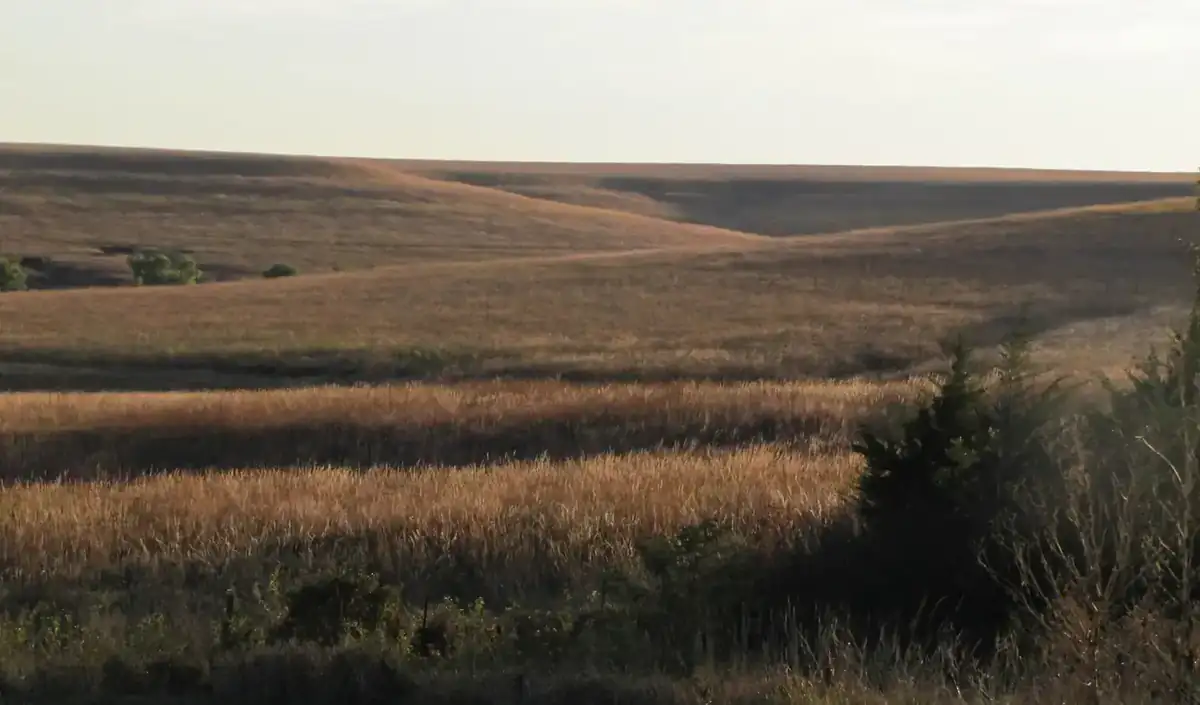
Tallgrass prairie once covered something like 140 million acres of North America, from Indiana to Kansas and from Canada to Texas. Less than four percent of it remains. Almost all of the rest was plowed within a single human lifetime, because prairie soil is the best farmland on earth. The Flint Hills of eastern Kansas survived for one reason: the limestone and chert beneath them are so close to the surface that a plow will not cut. The rock that made this country worthless for crops is the only reason any of it is left.
So the Flint Hills were grazed instead of broken, and what stands there now is the largest remaining expanse of tallgrass prairie in the world. In a wet year big bluestem grows over a man's head. The ranchers still burn it every spring, as the Kaw and the Osage did before them, and on an April night you can see the fire lines running for miles along the ridges.
Kansas spent six decades trying to make a piece of it a National Park. The most serious attempt came in 1961, when the Interior Department recommended a 57,000-acre Prairie National Park in Pottawatomie County. Ranchers had just watched the government take their neighbors' land for Tuttle Creek Reservoir, and they killed it. Proposal after proposal followed through the 1970s and 1980s and died the same way.
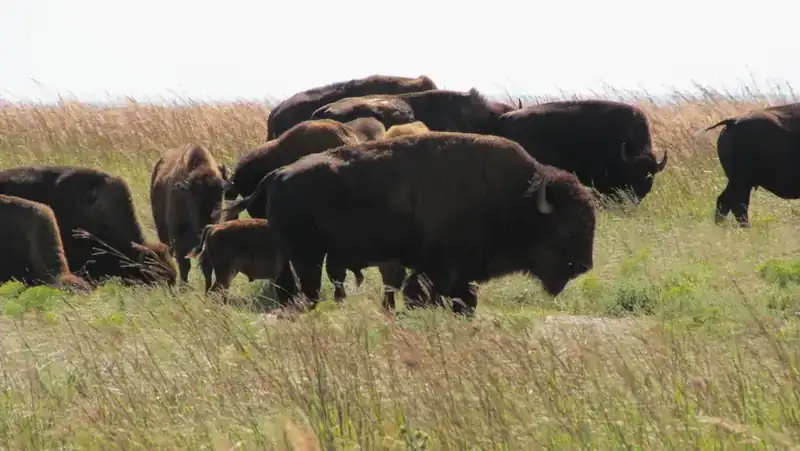
The thing that finally worked was a compromise nobody would have drawn on purpose. In 1994 a private trust bought a single historic ranch, and in 1996 Congress made it the Tallgrass Prairie National Preserve, at 10,894 acres, with most of the land still privately owned and cattle still grazing. The Nature Conservancy holds the deed today and bison were returned in 2009. It is a National Park unit by the narrowest of definitions, on a fraction of one percent of the ecosystem it represents, and it exists because the Park Service finally stopped asking anyone to sell.
The history of National Park Campaigns
Kansas prairie park proposals ran for six decades. The best documented is the 1958–63 push for a 57,000-acre Prairie National Park in Pottawatomie County, recommended by Interior in 1961 and killed by ranch-owner opposition after the Tuttle Creek Dam land takings. After further failed Flint Hills and Osage proposals, a public-private compromise produced the Tallgrass Prairie National Preserve in 1996, most of it privately owned. Tallgrass prairie once covered roughly 140 million acres; less than four percent remains, mostly in the Flint Hills.
- Distinct National Park attempts
- 5+ (c. 1930; 1960–61; 1970s–80s; 1991)
- Other designation attempts
- 1 successful (national preserve 1996)
Sources
- NPS, Tallgrass Prairie National Preserve Legislative History, 1920–1996
- Rebecca Conard, Kansas History 29 (2006)
- National Park Trust records
- c. 1930
First effort to establish a national prairie park in the United States; it fails at the outset.
- 1958–1963
NPS proposes a 57,000-acre Prairie National Park in Pottawatomie County; bills include H.R. 12538 and S. 3651 (86th Congress, 1960) and S. 73 (87th Congress, 1961). Interior recommends legislation November 15, 1961. Killed by local opposition following the Tuttle Creek Dam takings.
- 1970s–1980s
Successive Flint Hills, Cherokee Strip, and Osage Prairie preserve proposals fail.
- 1988–1989
The National Audubon Society obtains a purchase option on the Z-Bar/Spring Hill Ranch.
- 1991–1994
Sen. Nancy Kassebaum convenes stakeholders after local objection to full federal ownership.
- June 1994
The National Park Trust purchases the 10,894-acre Spring Hill/Z-Bar Ranch.
- November 12, 1996
Tallgrass Prairie National Preserve established (P.L. 104-333), with majority private ownership mandated.