- Location
- Illinois/Missouri
- Current protection
- Pere Marquette State Park, Mark Twain National Wildlife Refuge Complex, Two Rivers National Wildlife Refuge
- Status
- Private proposal; county opposition
- In the book
- Not featured in Undiscovered America
Why should it be a National Park?
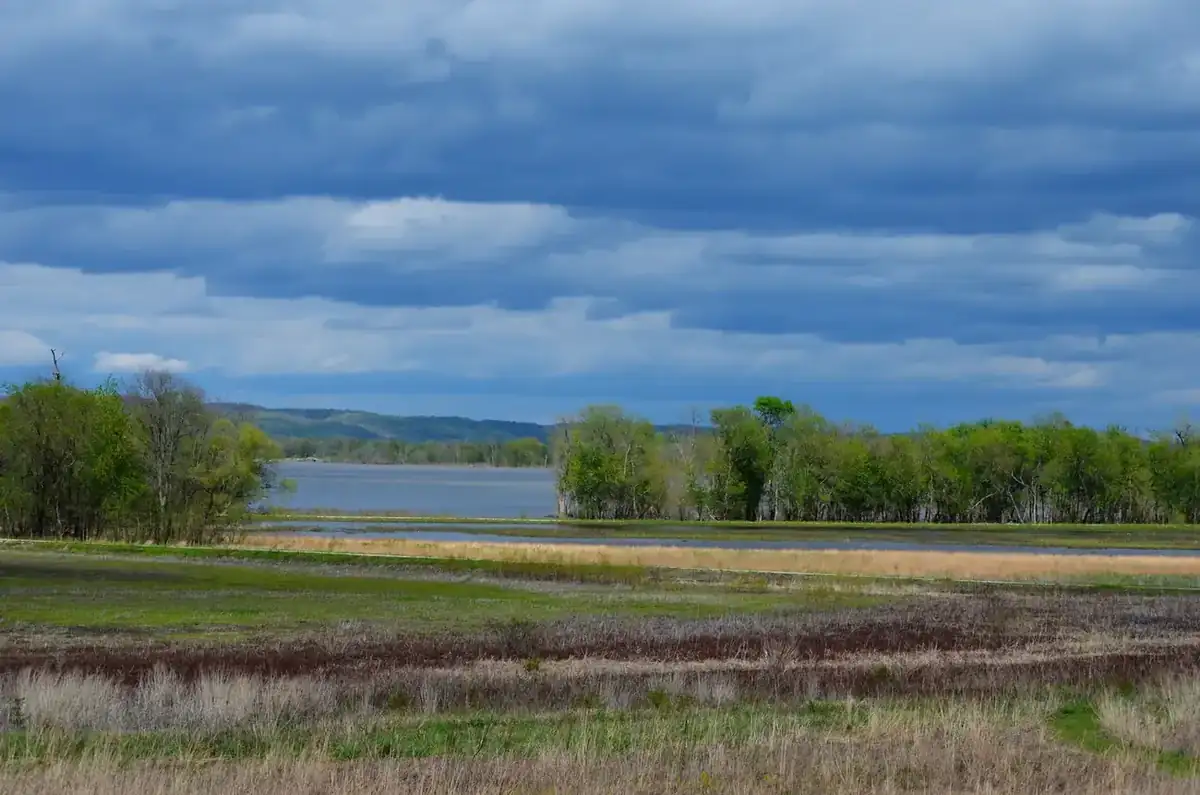
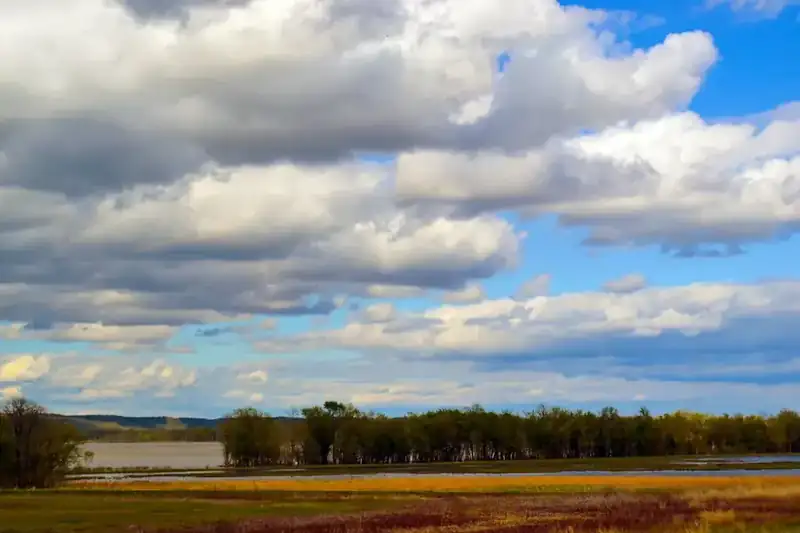
Fifteen miles north of St. Louis, the Missouri River finishes a two-thousand-mile run and empties into the Mississippi. A few miles upstream the Illinois River comes in from the northeast. Three of the largest rivers on the continent meet within a short drive of each other, and the country around that meeting is limestone bluff, backwater marsh, and floodplain forest that the rivers still flood.
Lewis and Clark spent the winter of 1803 and 1804 at Camp Dubois at the confluence, training and waiting for the ice to break. Before them the Illini and the Cahokians lived here; the great mound city is twelve miles away. On the bluff above the Mississippi at Alton is the Piasa, a painted monster that Marquette recorded in 1673 and that has been repainted on the rock face ever since. Bald eagles winter here by the hundreds, drawn to open water below the dams.
Pere Marquette State Park sits at the mouth of the Illinois with a lodge built by the Civilian Conservation Corps, and downstream the Mark Twain National Wildlife Refuge Complex protects a chain of river islands and bottoms. The Great River Road runs beneath the bluffs. It is a landscape of very good pieces that nobody manages as a whole.
In 2023 a developer in Alton proposed exactly that: a Great Rivers National Park of roughly 135,000 acres, stitching together some twenty federal, state, and local jurisdictions under the Park Service. The counties upstream responded with resolutions against it, one after another through 2024 and into 2025, and waterfowl groups objected over hunting. There is no bill and no study. The proposal is a reminder that in river country, where everybody's land touches everybody else's water, a park drawn on a map by someone in town is a hard sell in the county.
In winter the confluence fills with eagles. Several hundred bald eagles come down to the open water below the dams to fish, and the towns along the Great River Road have built January festivals around them. The same bluffs carry the road itself, a byway that runs under limestone cliffs where the Piasa Bird is painted, a figure Marquette described from his canoe in 1673 and that has been repainted on the rock ever since.
Fifteen miles the other side of the confluence stands Cahokia, the largest city north of Mexico before Philadelphia, which is itself on this site's list of proposals. The two are one story. The rivers are why the city was there, and a designation that took in both would be describing the reason this particular ground has mattered for a thousand years.
What makes it hard is that these are working rivers. The Corps of Engineers runs them as a navigation channel with locks, dams, and levee districts, the floodplain is farmed, and the marshes are hunted hard. The opposition that organized against the 2023 proposal was not about scenery. It was about who gets to keep hunting, farming, and barging, and no park proposal here will move until it answers that question first.
The history of National Park Campaigns
In November 2023 the Alton, Illinois developer AltonWorks, led by John Simmons, proposed a roughly 135,000-acre Great Rivers National Park at the confluence of the Mississippi, Missouri, and Illinois rivers, consolidating some twenty federal, state, and local jurisdictions under NPS management. Rural counties responded with opposition resolutions and hunting groups objected. No bill or NPS study has been introduced.
- Distinct National Park attempts
- 1 (2023–present; no bill or study)
- Other designation attempts
- 0
Sources
- The Telegraph (Alton) coverage, 2023–2025
- River Country News coverage
- AltonWorks proposal materials
- November 28, 2023
AltonWorks presents the proposal to Alton's Riverfront Advisory Commission; a press release describes a 135,000-acre, 144-mile park.
- 2024
AltonWorks states it will present to Rep. Nikki Budzinski, whose support would be needed to request an NPS study.
- October 14, 2024
The Jersey County Board approves a resolution of opposition.
- November 19, 2024
The Delta Waterfowl Foundation announces opposition over hunting access.
- Through February 2025
Calhoun, Pike, and Greene counties join in opposition; more than 20 organizations opposed.