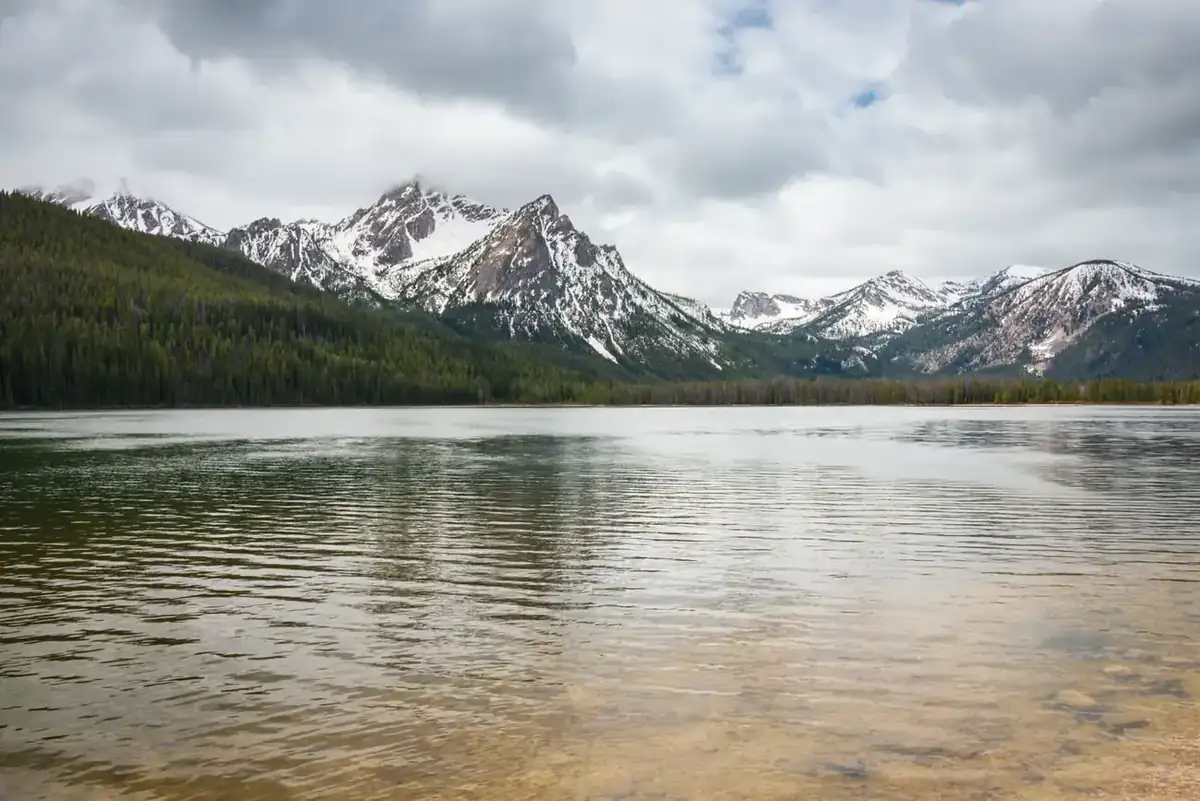
- Location
- Idaho
- Current protection
- Sawtooth range, Stanley Lake, Ponderosa Pine Scenic Byway
- Status
- No active campaign
- In the book
- Featured in Undiscovered America
Why should it be a National Park?
With an abundance of mountain ranges in the United States, why should the Sawtooth range in central Idaho become a National Park? Despite the fact the few are aware of the mountain range, the Sawtooth Mountains are just that incredible.
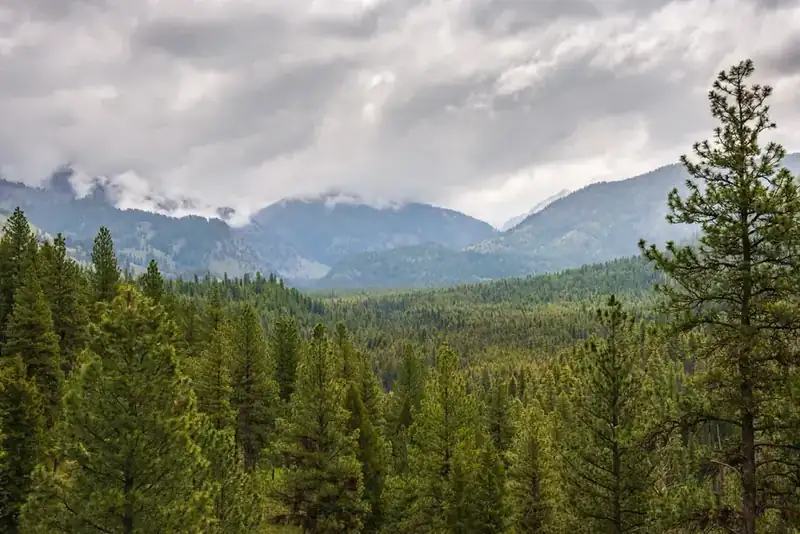
The Sawtooth range is named for a group of jagged peaks that rise and fall across 678-square-miles of Idaho. The region carries the nickname the "American Alps" because of the sharp, picturesque rock faces and the Swiss themed architecture dotting the towns alongside the more typical rustic buildings found in the west. Individual mountain peaks are surrounded by rivers, lakes, and pine trees creating a steady display of scenic vistas. Along these vistas, small, quiet campsites provide the perfect setting to watch the world class sunrises and sunsets that highlight Idaho's secret mountains.
Outdoor recreation is the biggest draw for tourists to the region. A wide array of activities are available including fishing, hiking, swimming, whitewater rafting, boating, camping, horseback riding, skiing, snowshoeing, snowmobiling, and multi-use trails for ATVs and dirt bikes. Much of the range is currently managed by the U.S. Forest Service, therefore certain areas allow pets to join visitors in experiencing the mountains. Also, there are several family friendly beaches open during the warmer months.
One of the best features about this mountain range is the overabundance of backcountry hiking trails. Some of these trails take several days to traverse and guide you through stunning valleys, over snowy mountains, and around crystal clear reflecting lakes. You might even spot a mountain goat on your hike. In the 1950s local goat populations were drastically decreased because of overhunting, but recent efforts and legislation have aided in the recovery of the Idaho mountain goat population. Now the Sawtooth range has one of the largest mountain goat communities in America.
Because of their isolation and small regional population, the Sawtooth range is an ideal escape for stargazers to experience the Milky Way. The heart of the range lies within the Central Idaho Dark Sky Reserve, an international designation for areas with extremely low levels of light pollution.
Idaho is one of the most overlooked and underappreciated states in terms of its natural beauty. Currently, the state does not have a single National Park, but the Sawtooth Mountains, Craters of the Moon, Owyhee Canyonlands, and Hells Canyon, all featured in this book, are great candidates for National Parks to showcase the natural wonder of Idaho.
Bills to establish a National Park in the Sawtooths were introduced in 1913, 1916, 1935, 1960, and 1963, but none were enacted.
The history of National Park Campaigns
The Sawtooths generated the most park bills of any place in this batch — five distinct pushes over 50 years — and a 1965 federal study that openly offered park-or-NRA. Sen. Frank Church deliberately introduced both a park bill and an NRA bill in 1966 to let Idahoans choose; hunting, grazing, mining, and Sun Valley development interests, plus NPS–Forest Service rivalry, delivered the NRA in 1972. Idaho remains the only Western state without a National Park.
- Distinct National Park attempts
- 5–6 (1913, 1916, 1935–36, 1960, 1963, 1966)
- Other designation attempts
- 3 (Primitive Area 1937; NRA + Wilderness 1972; wilderness additions 2015)
Sources
- P.L. 92-400 / H.R. 6957 text and H. Rept. 92-1276 (govinfo/govtrack)
- Sara Dant, Making Wilderness Work: Frank Church...
- Boise State Andrus Center whitepaper, "The Sawtooth NRA at 50" (2022)
- Boise State Blue Review, "High refuge in the Sawtooths"
- 1965 joint NPS/USFS Sawtooth report (RG 79 / Boise State)
- 1911
The Idaho Federation of Women's Clubs begins a crusade for a Sawtooth National Park; naturalist Jean Conly Smith petitions Sen. William Borah and Rep. Burton French; Emil Grandjean calls the range "the Alps of America." Wool growers and the Forest Service oppose.
- 1913
A park bill is introduced (year confirmed by a 1975 USFS management plan listing 1913, 1916, 1935, 1960, 1963). Bill number/sponsor UNVERIFIED.
- 1915
Idaho Legislature adopts a compromise resolution favoring a ~145,000-acre park (state Sen. Irvin Rockwell of Ketchum).
- 1916
Sen. William Borah (R-ID) and Rep. Addison T. Smith (R-ID) introduce Sawtooth National Park bills (enlarging the proposal to ~330,000 acres); opposed by Secretary of Agriculture D.F. Houston. Bill numbers UNVERIFIED (petitions "favoring the creation of the Sawtooth National Park," e.g., the Challis Commercial Club memorial of June 22, 1916, appear in the Congressional Record, vol. 53).
- 1935–1936
Sen. James P. Pope (D-ID) revives the idea and introduces a park bill (sources vary between 1935 and 1936, suggesting bills in both sessions of the 74th Cong.); died to resource-interest and Forest Service opposition. Bill number UNVERIFIED.
- 1937
Sawtooth Primitive Area established.
- 1960
Sen. Frank Church (D-ID) introduces a feasibility-study bill for a Sawtooth National Park; he lets it die. Bill number UNVERIFIED.
- 1963
Church introduces a "Sawtooth Wilderness National Park" bill (primarily the Primitive Area); died — Church admitted it was designed to spur feasibility studies, not to pass. Bill number UNVERIFIED.
- 1965
A joint Interior/Agriculture (NPS/USFS) report recommends either a National Park (NPS) or a national recreation area (USFS). (Exact title/date UNVERIFIED — possibly "Sawtooth Mountain Area Study, Idaho," Dec. 1965; seek at Boise State Special Collections / RG 79.)
- April 1966
Church introduces two Senate bills: one for a Sawtooth (Wilderness) National Park, and one (co-sponsored with Sen. Len B. Jordan, R-ID) for a Sawtooth National Recreation Area allowing hunting, mining, timber, and grazing. Sun Valley hearings (June 17, 1966) overwhelmingly favor the NRA. Bill numbers (incl. the suggested S. 3218) UNVERIFIED.
- 1968
Molybdenum discovered at Castle Peak in the White Clouds; ASARCO proposes a mine, galvanizing protection sentiment.
- 1969
Church/Jordan amend the NRA bill to include the threatened White Clouds; it passes the Senate but dies in the House Interior Committee (1970).
- 1970
Cecil Andrus runs for governor on stopping the Castle Peak mine.
- March 1971–1972
The united Idaho delegation introduces H.R. 6957; Andrus testified for a combined Park-NRA to guarantee hunting rights and block mining.
- August 22, 1972
President Nixon signs P.L. 92-400 (H.R. 6957), 86 Stat. 612, creating the ~756,019-acre Sawtooth NRA, converting the Primitive Area into the 217,088-acre Sawtooth Wilderness, and banning new mining; dedicated at Redfish Lake Sept. 1, 1972. The act also authorized a study of National Park status (16 U.S.C. §460aa-13: report due by December 31, 1974), which "kept the Park idea alive for a few more years" and died administratively. Why NRA won: hunting, grazing, Sun Valley development, and NPS–USFS turf.
- August 7, 2015
P.L. 114-46, Rep. Mike Simpson's Sawtooth NRA and Jerry Peak Wilderness Additions Act, designates the Cecil D. Andrus–White Clouds and Hemingway–Boulders wilderness areas — chosen over a competing proposed Boulder-White Clouds National Monument.