- Location
- Wyoming
- Current protection
- Bridger–Teton National Forest, Shoshone National Forest, Fremont Lake
- Status
- No active campaign
- In the book
- Featured in Undiscovered America
Why should it be a National Park?
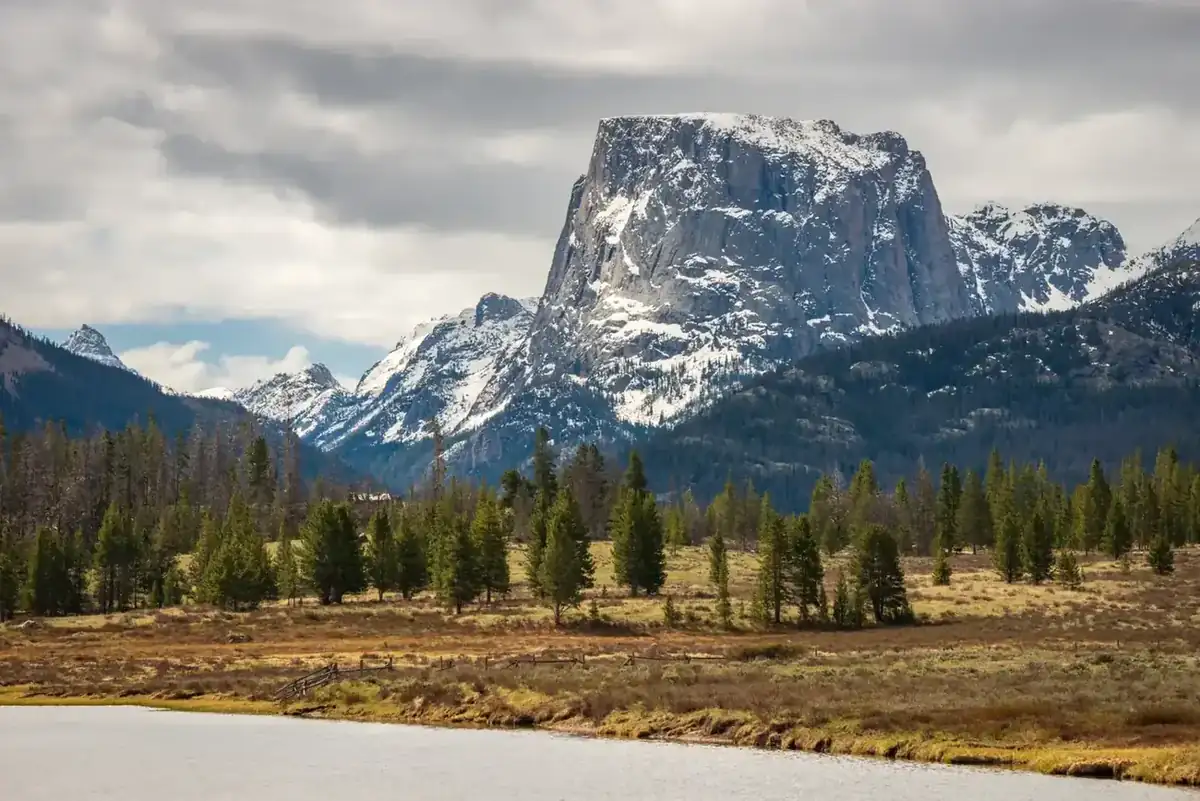
Just a few hours drive from Yellowstone and Grand Teton National Parks is the Wind River Range of mountains. Despite the mass of tourism the National Parks get, this impressive series of peaks, lakes, valleys, and glaciers remain unknown and unvisited, even though they extend 100 miles across western Wyoming.
The most immediately impressive feature is a glaciated canyon valley that lies at the center of the peaks. These enormous granite walls are reminiscent of Yosemite Valley in grandeur and scale. It even boasts a competitor to the famous El Capitan named Squaretop Mountain which towers higher above the valley floor than its California counterpart.
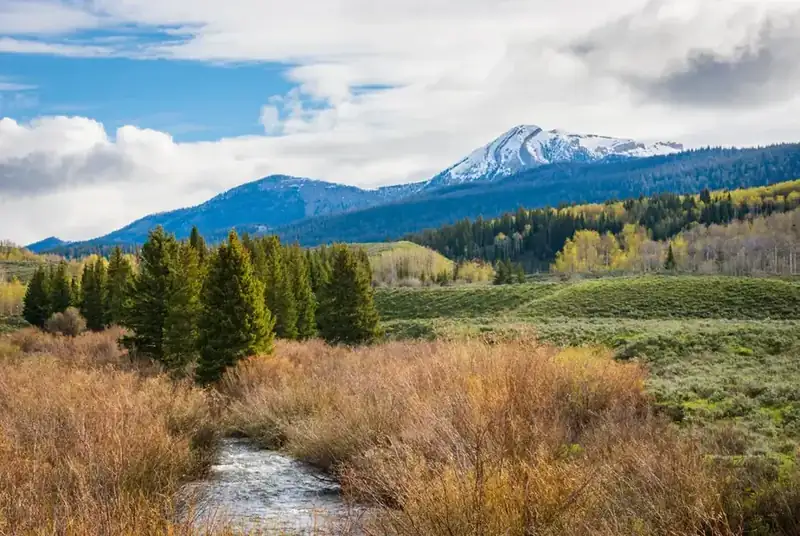
The Wind River Range has been lost to history due to its isolation. The easiest form of entry into the mountains is by a 30 mile dirt road which turns to impassable mud after rainstorms. The range is a largely unspoiled wilderness, split between the Bridger-Teton and Shoshone National Forests. Backcountry hiking is the most common way of experiencing the hundreds of intimate high-altitude lakes and mountain peaks that run down the spine of the range.
These mountains create a natural boundary so steep that the continental divide follows their crest. The range is home to the tallest point in Wyoming, Gannett Peak. At 13,804 feet it is the centerpiece of the high-country and the highest peak in the Rocky Mountains outside of Colorado. In addition, the Wind River Range also features 40 named peaks over 13,000 feet and seven of the largest glaciers found in the Rockies. The mountains have created a region of ecological diversity that allows a variety of species to flourish including grizzly bears, black bears, moose, elk, wolves, mountain lions, pronghorn, mule deer, wolverines, eagles, falcons, hawks, and many species of fish.
The mammoth and diverse terrain make the range a standout destination among rock climbers, recreational fishermen, and skiers. While outdoors-minded visitors take full advantage of the mountains, the number of tourists is limited mainly to locals and those who discover the area by word-of-mouth. It is strongly recommended that visitors be prepared for the isolated landscapes and abundant wildlife, as there are no facilities or communication infrastructure throughout much of the range.
There is little doubt this region would already be a protected National Park if the state of Wyoming hadn't crusaded against parks so fiercely following what they see as the theft of the Grand Teton mountain range. Grand Teton National Park was created when John D. Rockefeller, Jr purchased farms and towns at the base of the Tetons and did not inform the locals about who he was or his intent with the lands. This deception caused a wound in Wyoming that may never heal. Despite the complicated history and the political difficulties, the Wind River Range is still a crowned jewel of the American landscape that is missing from our national consciousness.
The history of National Park Campaigns
Nothing — the range went straight from national forest to primitive areas (Bridger 1931; Glacier and Popo Agie 1932) to wilderness (Bridger 1964, expanded 1984; Fitzpatrick 1976; Popo Agie 1984), with the eastern slope inside the Wind River Indian Reservation. No National Park or monument has ever been proposed.
- Distinct National Park attempts
- 0
- Other designation attempts
- primitive areas 1931–32; wilderness 1964/1976/1984
Sources
- Bridger-Teton and Shoshone NF histories
- Wyoming Wilderness Act (P.L. 98-550) legislative history
- 1868
Wind River Indian Reservation (Fort Bridger Treaty).
- 1891 / 1908
Yellowstone Park Timber Reserve / Shoshone NF; Bridger NF (1911; merged into Bridger-Teton 1973).
- 1931
Bridger Primitive Area; 1932 — Glacier and Popo Agie Primitive Areas.
- September 3, 1964
Bridger Wilderness (Wilderness Act; 428,169 acres after 1984 expansion); 1976 — Fitzpatrick Wilderness (198,525 acres; formerly Glacier PA); October 30, 1984 — Wyoming Wilderness Act: Popo Agie (101,870 acres) and Bridger additions.
- 1969
Sinks Canyon State Park; 2010s — Wind River Reservation permit system for tribal lands.