- Location
- Alaska
- Current protection
- Bering Land Bridge National Preserve (2.7 million acres, National Park Service)
- Status
- No active campaign
- In the book
- Not featured in Undiscovered America
Why should it be a National Park?
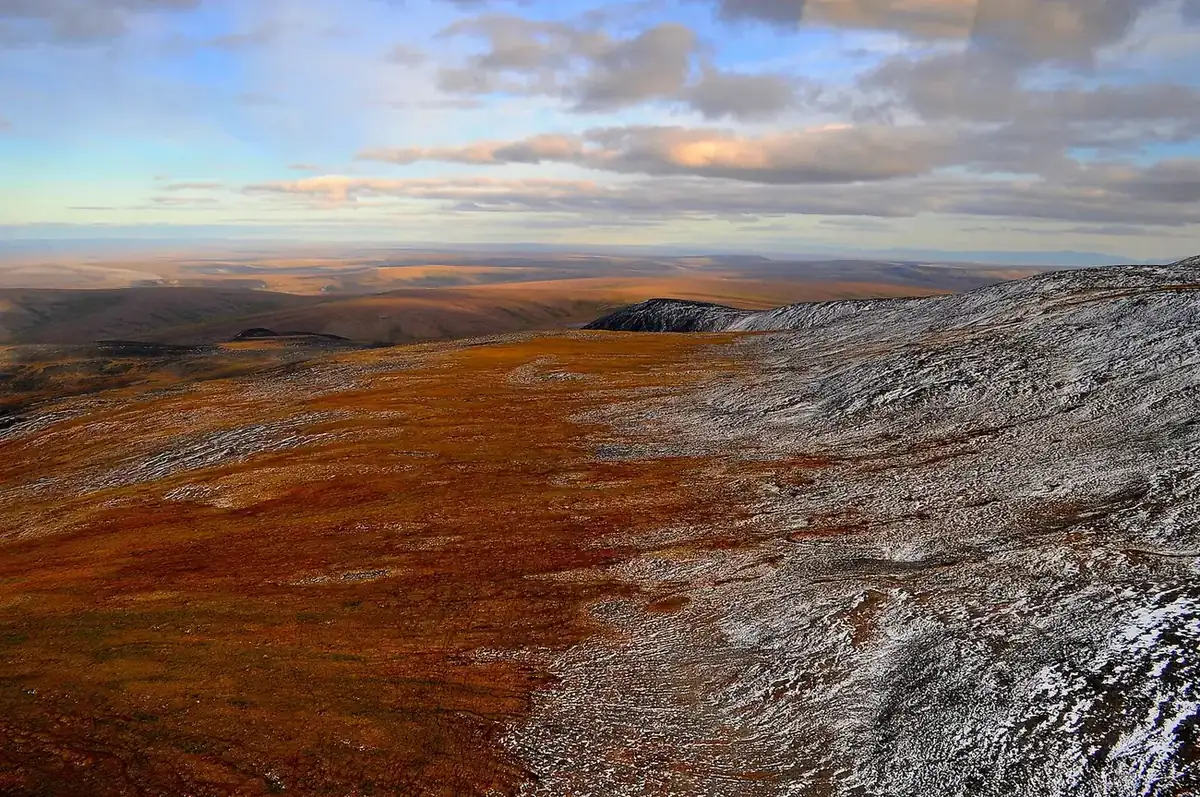
Bering Land Bridge protects what is left above water of Beringia, the thousand-mile plain that joined Asia to North America whenever the ice ages pulled enough water out of the sea. Across it came the plants, the animals, and the people, and nearly everything alive in the Americas before 1492 traces back through this ground. There is no other place in the National Park System that holds the doorway to two continents.
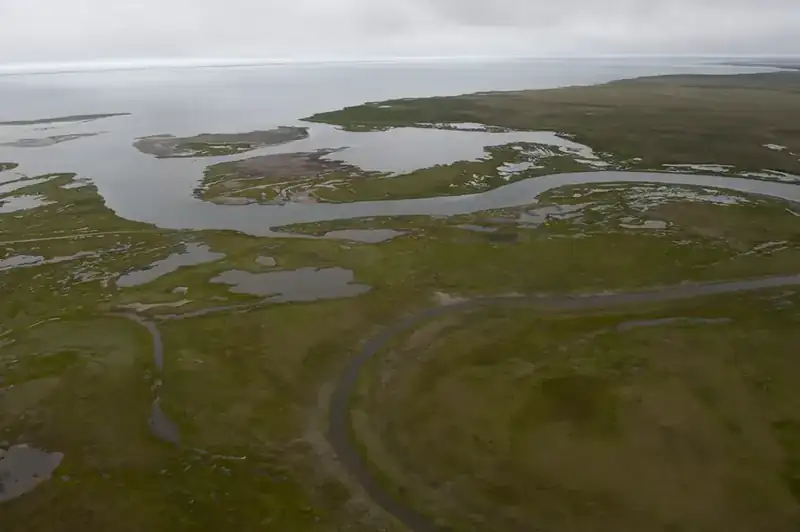
The land itself does not look like a doorway. It looks like open tundra on the Seward Peninsula, rolling to the Chukchi Sea without a road anywhere in it, and it takes a bush plane or a snowmachine to reach. What it holds is stranger than its surface suggests: lava flows barely a thousand years old, the largest maar lakes on earth where magma met permafrost and exploded, granite tors standing out of the tundra like ruins, and hot springs that have drawn people for as long as anyone has lived here.
It is also a working landscape. The Iñupiat communities around the preserve hunt, fish, and gather here as they always have, and ANILCA wrote that right into the law. Any change in designation runs straight into that fact, and any honest proposal has to start with the people who live there rather than with a map drawn in Washington.
The story here is of the first rank and the protection is of the second. A park at Bering Land Bridge would not have to be invented from scratch: Gates of the Arctic, Wrangell-St. Elias, Katmai, and Lake Clark are all National Park and Preserve, written so that subsistence continues under ANILCA and the villages keep what the law already guarantees them. That is the shape a Bering Land Bridge National Park and Preserve would take, and it is the shape Senator Durkin's draft was reaching for in 1979.
The history of National Park Campaigns
Bering Land Bridge came within one Senate draft of being a National Park. It was proclaimed a national monument in 1978 when the Alaska lands bill stalled, and an early version of that bill would have made it a park outright. What passed in 1980 made it a preserve, and the park question has been waiting ever since.
- Distinct National Park attempts
- 1 (1979).
- Other designation attempts
- 2 (monument 1978; preserve 1980).
Sources
- Alaska National Interest Lands Conservation Act, Public Law 96-487 (December 2, 1980)
- S. 222, 96th Congress, Alaska National Interest Lands Conservation Act of 1979
- Presidential proclamation establishing Bering Land Bridge National Monument (December 1, 1978)
- National Park Service, Bering Land Bridge National Preserve: park management and Beringia pages
- National Park Service, Shared Beringian Heritage Program
- December 18, 1971
The Alaska Native Claims Settlement Act passes. Section 17(d)(2) lets the Interior Secretary withdraw federal land in Alaska for study as parks, refuges, forests, and wild rivers, which starts the fight over what becomes of the Seward Peninsula.
- 1977–1978
The Alaska lands bill passes the House and stalls in the Senate, leaving the withdrawals about to expire.
- December 1, 1978
President Carter proclaims Bering Land Bridge National Monument under the Antiquities Act, one of a group of Alaska monuments created the same day to hold the ground while Congress argued.
- 1979
S. 222, Senator John Durkin's version of the Alaska National Interest Lands Conservation Act, would have designated a Bering Land Bridge National Park. The park language does not survive the negotiations.
- December 2, 1980
ANILCA (Public Law 96-487) becomes law and establishes Bering Land Bridge National Preserve, a designation that keeps both subsistence and sport hunting legal.
- Early 1990s
The United States and Russia discuss a shared Beringian heritage park across the strait. The Park Service creates the Shared Beringian Heritage Program, which still funds research and exchanges on both sides.
- Since 1980
No bill has been introduced to make the preserve a National Park.