- Location
- New Mexico
- Current protection
- Ghost Ranch, Echo Amphitheater, Abiquiu Lake
- Status
- No active campaign
- In the book
- Featured in Undiscovered America
Why should it be a National Park?
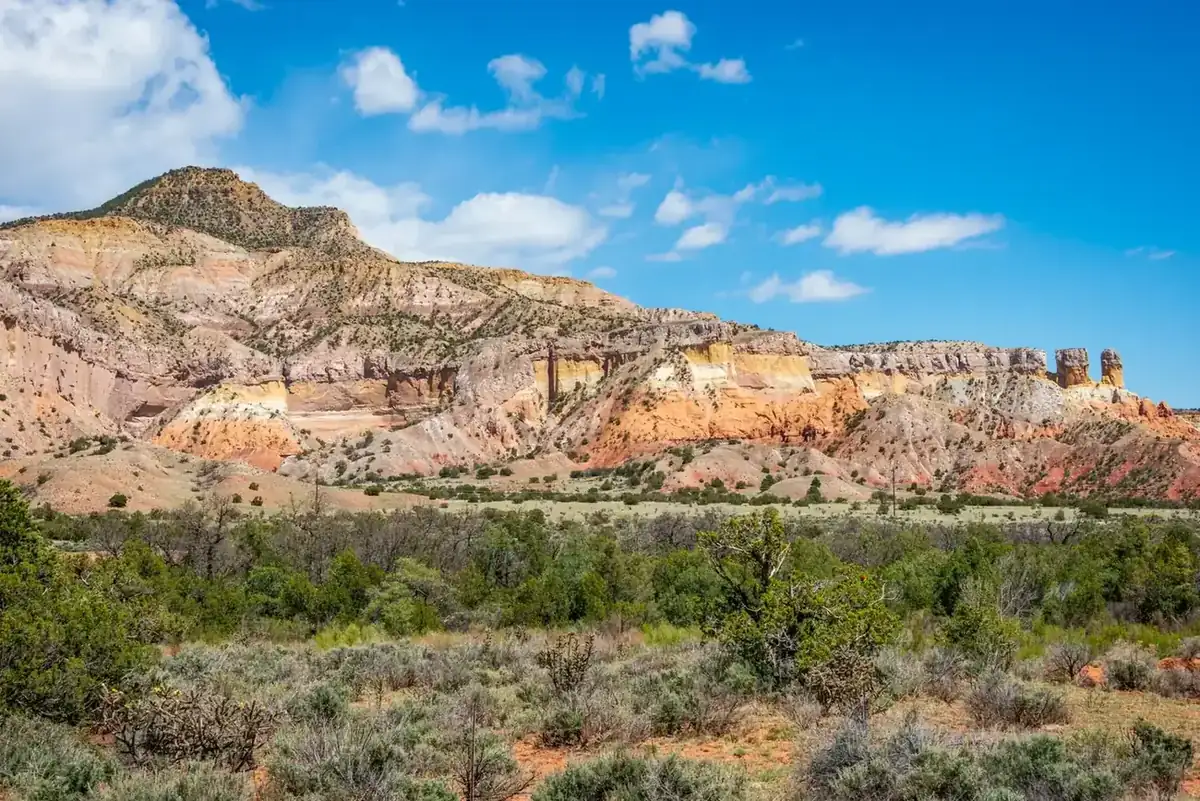
The name Ghost Ranch is both a description of the overall setting and a specific name for a retreat and education center nestled into the cliffs. This landscape of scrubland and desert buttes may be the most recognizable place in the country that you don't know by name. Ghost Ranch is the backdrop of countless western films and works of art. The scenery famously inspired painter Georgia O'Keeffe who frequented the area. Her works showcase the grandeur of the painted cliffs and formations that dominate the area, but also its more intricate features like plants and animals.
West of the town of Abiquiu in northern New Mexico is a world heritage site some refer to as Ghost Ranch. This beautiful landscape is made up of rocky sandstone mesas and buttes. The orange appearance of the cliffs and formations is mixed with large sections of painted desert near their base.
Ghost Ranch has surprisingly limited access. The setting is best experienced from U.S. Highway 84. The sandstone buttes can be explored through a few hard to find trails. The easiest way of getting up close to the desert features is the Echo Amphitheater trail. This short but rewarding site also offers a picnic site and campground, making it the best place to take in the beauty. Alternatively, the Ghost Ranch resort offers its own trails to the top of the painted desert cliffs, but access requires a small entrance fee.
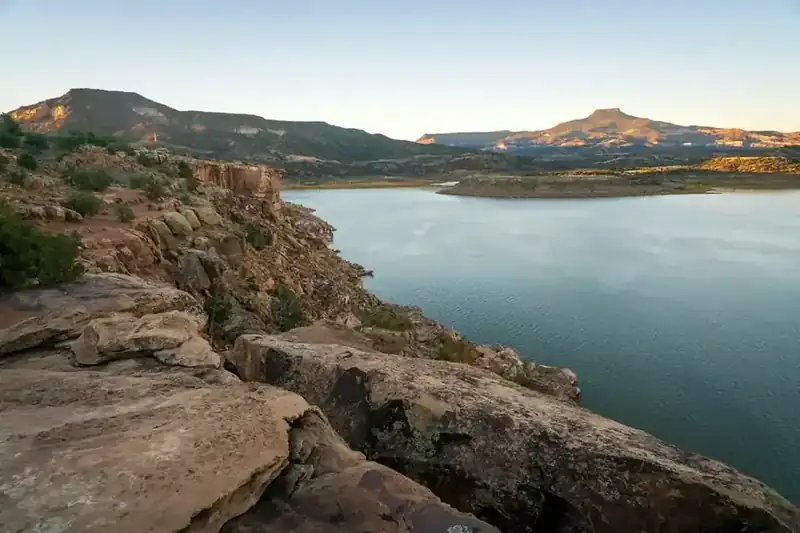
In addition to the colorful rocks, this area is also home to Abiquiu Reservoir, a picturesque lake at the center of the experience. The lake is popular for swimming, kayaking, and camping. In summer the heat can regularly reach the mid-80s and the waters provide a place to cool off.
Surrounding the desert landscape of Ghost Ranch are several forested plateaus protected in the Carson and Santa Fe National Forests. Making your way into these forests requires navigating small back roads. Campgrounds can be found throughout these forests, but they can be difficult to find on the day. Do research before you set off and bring a GPS unit to help you find your destination.
New Mexico is truly a wondrous place made up of diverse and stunningly beautiful natural wonders. In 2019, Congress passed legislation creating White Sands National Park from the former national monument of the same name. White Sands became the second National Park in the state after Carlsbad Caverns was established in 1930. Those parks highlight the distinct natural features of a sprawling gypsum sand dune field and one of the largest cave systems in the country. Neither National Park protects the rocky, scrubland desert that dominates the state. Ghost Ranch is among the best candidates for receiving a greater level of protection and notoriety. The beauty of the setting is undeniable, and it should be protected forever.
The history of National Park Campaigns
No National Park or national monument has ever been proposed here. Protection came as wilderness (1978), a state scenic river (1978), a federal Wild & Scenic River (1988), a BLM wilderness study area, and private conservation planning at Ghost Ranch.
- Distinct National Park attempts
- 0
- Other designation attempts
- NNL 1975; wilderness 1978; state scenic river 1978; W&S 1988; WSA
Sources
- Endangered American Wilderness Act (P.L. 95-237) legislative history
- P.L. 100-633 (Rio Chama W&S)
- BLM Taos Field Office Rio Chama plans
- Lesley Poling-Kempes, Ghost Ranch (2005)
- 1934–36
Arthur Pack acquires Ghost Ranch; 1947 — Edwin Colbert's Coelophysis quarry discovery; 1955 — Pack gives the ranch to the Presbyterian Church.
- 1956–63
Abiquiu Dam (USACE) built. (Wikipedia)
- 1975
Ghost Ranch National Natural Landmark.
- February 24, 1978
Chama River Canyon Wilderness (50,300 acres, Santa Fe and Carson NFs) in the Endangered American Wilderness Act (P.L. 95-237); 1978 — Rio Chama designated a New Mexico State Scenic and Pastoral River. (Wikipedia; USFS)
- November 7, 1988
31 miles of the Rio Chama designated Wild & Scenic (P.L. 100-633). (USFS)
- Ongoing
BLM Rio Chama Wilderness Study Area adjoins the wilderness (recreation.gov); Old Spanish National Historic Trail (2002) follows the corridor.
- January 2025
Carson NF approves Ghost Ranch trail reroutes (Chimney Rock, Kitchen Mesa, Matrimonial Point). (fs.usda.gov)
- December 2025
Ghost Ranch Conservation Plan (easements) announced. (prior research; VERIFY details)