- Location
- Florida
- Current protection
- Ocala National Forest, Silver Springs State Park, Paynes Prairie Preserve State Park
- Status
- Study bill in Congress
- In the book
- Not featured in Undiscovered America
Why should it be a National Park?
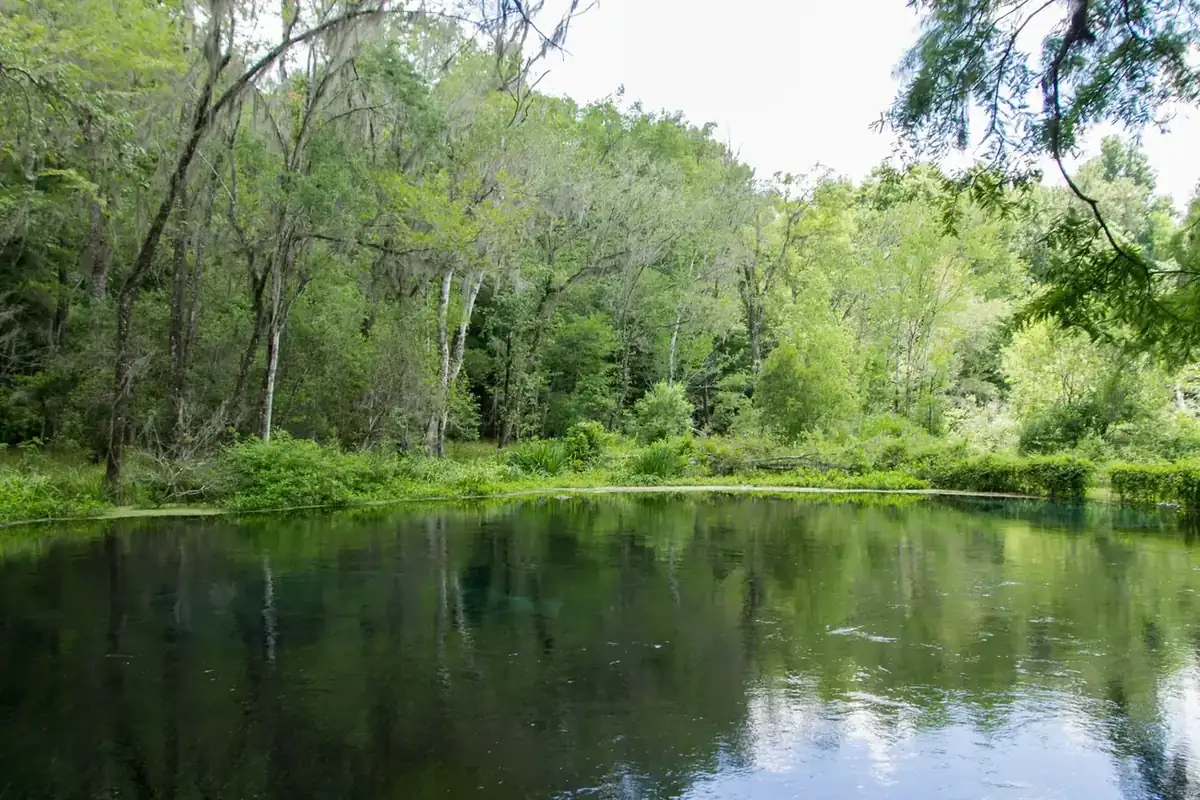
Florida has more first-magnitude springs than any other place on the planet. A first-magnitude spring discharges at least sixty-four million gallons a day, and Florida has more than thirty of them, water that fell as rain, filtered down through a thousand feet of limestone, and came back up clear enough to read a newspaper through twenty feet of it. Silver Springs alone pushes out five hundred million gallons a day and has been a tourist attraction since the 1870s, when steamboats came up the Ocklawaha to see it.
The springs feed rivers, and the rivers run through the Ocala National Forest, the oldest national forest east of the Mississippi and the largest surviving sand pine scrub in the world. Juniper Springs, Alexander Springs, Salt Springs. Farther north is Paynes Prairie, a 21,000-acre wet savanna where bison and wild horses graze and where William Bartram, in 1774, described alligators so thick he could not sleep. The Ocklawaha itself was half-destroyed by the Cross Florida Barge Canal, a project abandoned in 1971, and the Rodman Dam still floods twenty miles of it.
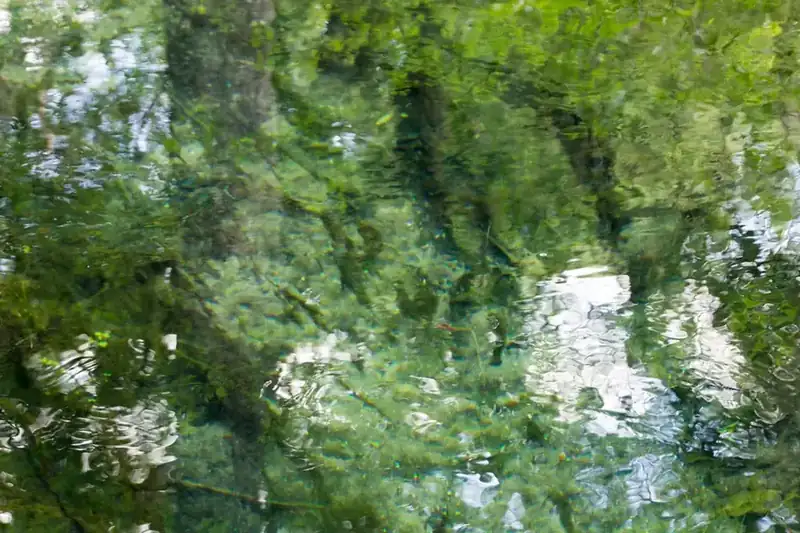
The springs are in trouble, and the trouble is invisible. Nitrate from fertilizer and septic systems has turned water that was once gin-clear into water that grows mats of algae. Aquifer withdrawals have cut flows. Several springs that ran continuously for thousands of years have stopped.
In July 2025 a Florida congressman filed a bill to study a Florida Springs National Park covering as much as 2,800 square miles. It is a study bill, not a park, and the reaction among the people who have spent their careers on these springs has been skeptical. Their objection is precise: a National Park boundary does not govern the aquifer, and the aquifer is the problem. Pumping and pollution happen on farms and lawns far outside any line the Park Service could draw. It is the rare case where the people who love a place most are the ones arguing that a park would not save it.
A spring run is a strange thing to stand in. The water leaves the aquifer at seventy-two degrees and stays there year round, so in January the manatees crowd in by the hundreds to keep from dying of cold, and in July it is the coldest water in Florida. The glass-bottom boats at Silver Springs have been running since the 1870s, which makes this one of the oldest tourist attractions in the country, and the clarity they were built for is the thing now at risk.
The Ocala National Forest around the springs is the oldest national forest east of the Mississippi and holds the largest sand pine scrub on earth, a fire-dependent desert of a forest with its own scrub-jays. It is also a working forest with logging, hunting, and off-road trails, and those uses are exactly what a National Park designation would end. That is the fight in one sentence.
The bill on the table is a study bill, which is where nearly every park on the map began. Nobody has drawn a boundary yet and the counties are divided, but a favorable study would put a federal finding behind what Floridians already know about these springs. The nitrate arriving from outside any boundary is not an argument against national protection. It is an argument that the springs need a steward with national standing and a national budget, which is what a park is.
The history of National Park Campaigns
Rep. Randy Fine introduced a bill on July 23, 2025 directing an Interior special resource study of a Florida Springs National Park covering up to 2,800 square miles, including the Ocala National Forest, Paynes Prairie, Silver Springs, the Ocklawaha River, and dozens of springs and conservation areas. It builds on the Florida Springs Institute's 2022 concept. It is a study bill, not an establishment bill, and springs advocates are divided, with a counter-proposal for a national heritage area and a petition opposing federalization.
- Distinct National Park attempts
- 1 legislative study bill (2025), plus one non-governmental concept (2022)
- Other designation attempts
- 1 (national heritage area counter-proposal)
Sources
- congress.gov, H.R. 4656 (119th Congress)
- Florida Springs Institute concept materials (2022)
- WUFT and Florida Times-Union coverage, 2025
- 2022
The Florida Springs Institute publishes a 'Great Springs and Rivers National Park' concept.
- July 23, 2025
Rep. Randy Fine (R-FL) introduces H.R. 4656, the Path to Florida Springs National Park Act, directing a special resource study of a roughly 2,800-square-mile area; report due within three years of funding.
- August 25–26, 2025
Public rollout in the Ocala National Forest.
- September–October 2025
Divided reaction; the Florida Springs Council proposes a national heritage area instead and a 'Protect the Ocala National Forest' petition draws thousands of signatures.