- Location
- Iowa
- Current protection
- Loess Hills State Forest, Preparation Canyon State Park, Stone State Park
- Status
- No active campaign
- In the book
- Not featured in Undiscovered America
Why should it be a National Park?
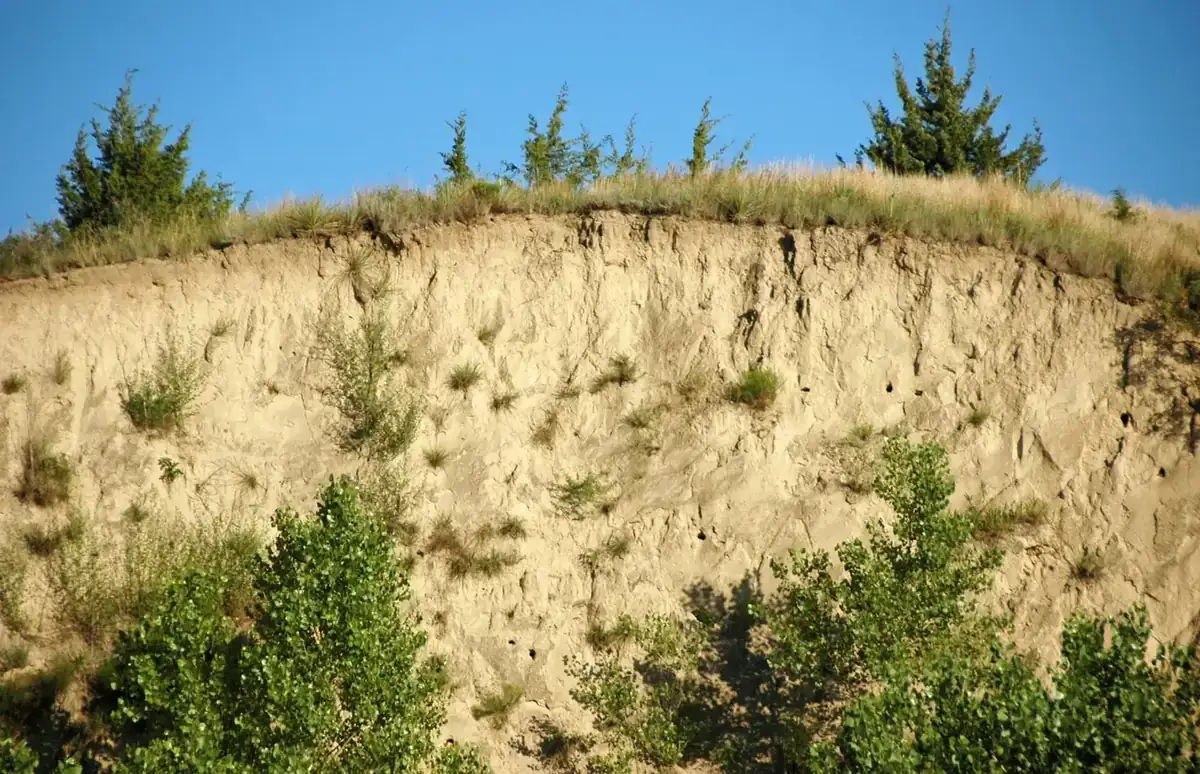
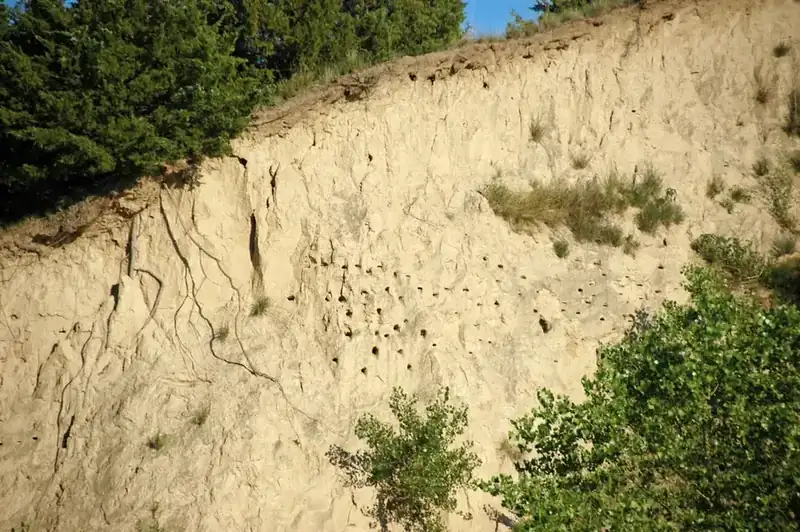
There are two places on earth where wind-blown silt piled up deep enough to build its own mountain range. One is Shaanxi Province in China. The other is a two-hundred-mile band along the western edge of Iowa. When the glaciers melted, meltwater carried rock flour down the Missouri River valley and left it on the flats; in winter the flow dropped, the mud dried, and the wind picked it up and dropped it on the eastern bluffs. It did this for roughly ten thousand years. The result is a wall of hills rising two hundred feet above the floodplain, sixty to two hundred feet of loess deep, covering something like 650,000 acres.
The soil behaves like nothing else. Locals call it sugar clay, because dry it is hard as brick and wet it has no cohesion at all. That property produces landforms found almost nowhere else: razor ridges less than ten feet across falling away at near-vertical angles on both sides, peak-and-saddle topography, and cat-step terraces where the hillside has slumped into stairs.
Because the slopes face southwest and bake, they support plants that belong six hundred miles west. Yucca grows here. So does the prairie rattlesnake, the Great Plains toad, and the six-lined racerunner, all of them far east of where a field guide would put them. Iowa's largest surviving prairies are in these hills, and the Nature Conservancy's Broken Kettle Grasslands, the biggest contiguous native prairie left in the state, runs a small bison herd on ground that was never plowed because no plow could hold the hill.
Congress ordered a Park Service study of the Loess Hills in 1999. The study found the landscape nationally significant and recommended a National Reserve, a designation that leaves land in private hands and gives the Park Service a coordinating role. No bill followed, and no National Park has ever been proposed. Protection is a patchwork of state forest, state parks, county preserves, and conservancy land along a 220-mile scenic byway. A landform with one peer on the planet is held together by whoever happens to own the next hill.
The prairie on these ridges is dying quietly, and not from plowing. Without fire, eastern red cedar climbs the slopes and closes them in within a generation, and most of what is left of the bluff prairie survives because somebody burns it on purpose. The Nature Conservancy's Broken Kettle Grasslands at the north end is the largest remaining prairie in Iowa, with bison back on it and the state's only population of prairie rattlesnakes.
Almost all of it is private, and that is the whole problem. The study took the easier road and recommended a reserve because a reserve asks nothing of landowners, but the deepest loess on the continent outside China is a national landscape sitting in private hands, and the Park Service has assembled parks out of exactly that before. Great Smoky Mountains was bought farm by farm with donated money. Indiana Dunes took sixty years. A Loess Hills park would be built the same way, from willing sellers and easements, and it would take as long as it takes.
The Missouri River below is not the river the hills were built beside. It was straightened and walled by the Corps in the mid-twentieth century, and the braided floodplain that fed the dust storms that built these bluffs is gone. What remains is the record of it, two hundred feet deep, holding prairie that belongs six hundred miles west.
The history of National Park Campaigns
The Loess Hills, among the deepest wind-deposited loess formations on Earth outside China, received a congressionally directed NPS study under the Loess Hills Preservation Study Act of 1999. The special resource study recommended National Reserve status rather than a National Park, and no park bill has followed.
- Distinct National Park attempts
- 0 (study only)
- Other designation attempts
- 2 (National Natural Landmark 1986; 1999 study and National Reserve recommendation)
Sources
- NPS, The Loess Hills of Western Iowa Special Resource Study
- Senate Report 106-66
- Loess Hills Alliance materials
- 1986
Portions of the Loess Hills designated a National Natural Landmark.
- 1999
The Loess Hills Preservation Study Act (S. 776; Sens. Grassley and Harkin) authorizes an NPS special resource study, with up to $275,000 authorized.
- c. 2001–2002
The special resource study recommends National Reserve status, not a National Park; no park bill follows.
- Present
Protection remains a patchwork of state forest, state parks, county preserves, and Nature Conservancy holdings.