- Location
- Oregon/Washington
- Current protection
- Mount Hood National Forest, Columbia River Gorge, Multnomah Falls
- Status
- Active citizen campaign
- In the book
- Featured in Undiscovered America
Why should it be a National Park?
Oregon has a reputation for being outdoorsy and using green technology, but despite this association with environmental culture, Oregon only has one National Park, Crater Lake. Its neighbors California and Washington have nine and three, respectively. Even with its lack of National Parks, Oregon has an array of incredibly diverse landscapes that deserve to be better preserved.
Many attempts have been made to turn Mount Hood and the Columbia River Gorge into a National Park. Surprisingly, most locals already think this majestic landscape is a National Park, but it is actually a national forest. The logging industry is one of the reasons why there is only one National Park in the state, as there is an abundance of old-growth timber west of the Cascade Mountains.
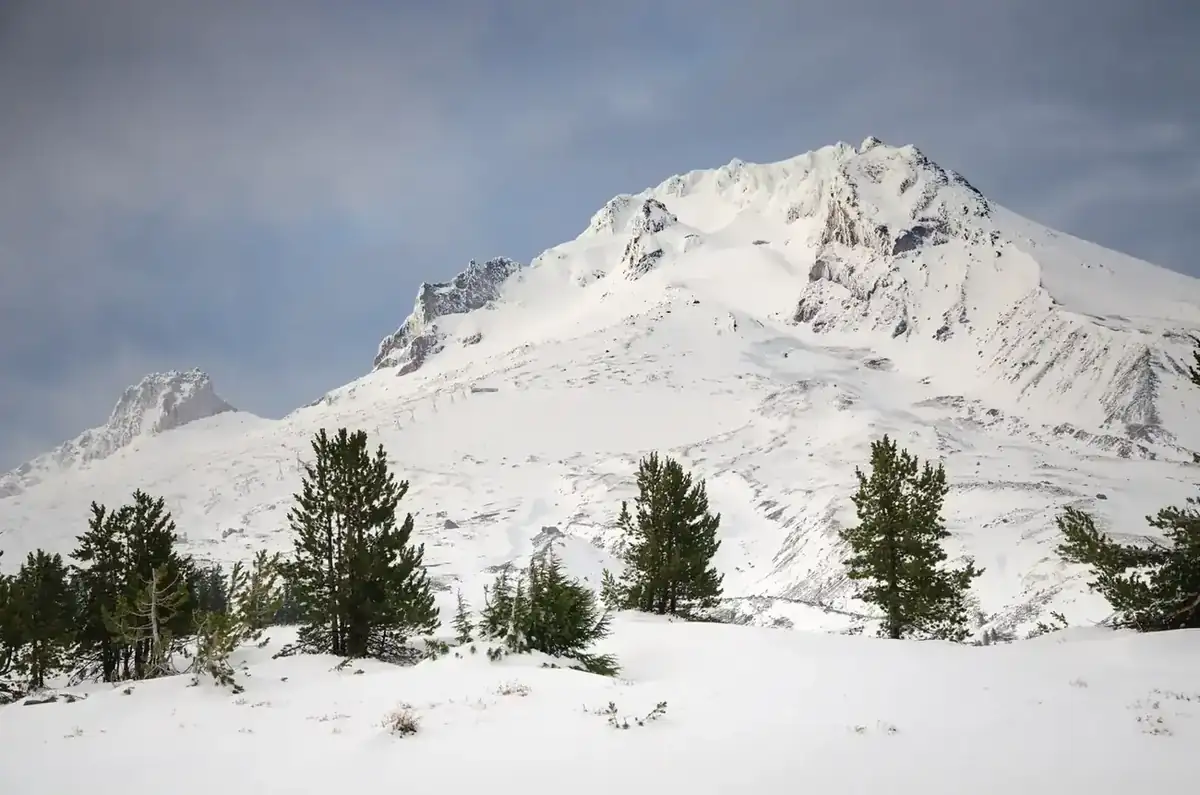
Below Mount Hood's snowy peak lie thick and lush pine forests. But in these tree-covered valleys and hillsides, a systematic logging operation is destroying vast swaths of forests at an unsustainable rate. There are approximately 3,000 miles of roads in Mt. Hood National Forest, and 73% of them are logging roads. From the 1960s through the 1980s, the USFS had an aggressive logging policy and old-growth forests were decimated.
At higher elevations, the forests remain intact because of tourism around the historic Timberline Lodge and its ski area. Well-traveled areas that attract visitors are safe from the devastation that happens just beyond the view of cars and trails. Meanwhile, several lawsuits and environmental groups have challenged the USFS management practices, citing landslides and stream pollution from loose soil caused by deforestation, which has severely reduced local fish populations.
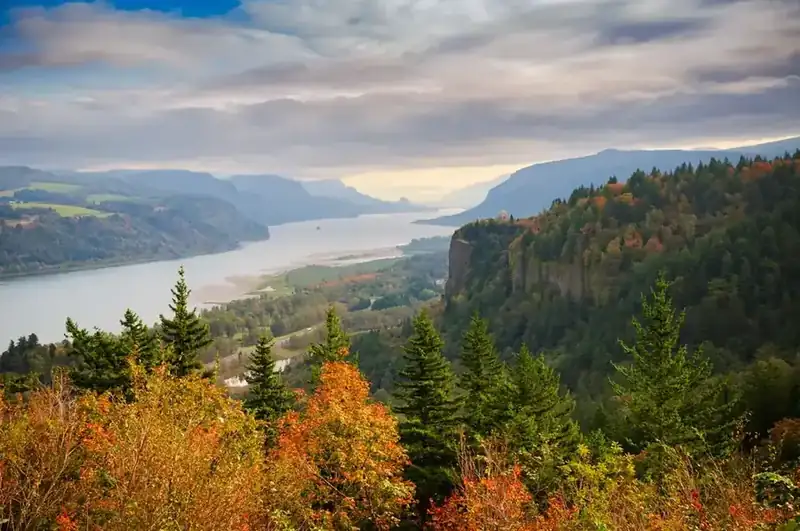
The Columbia River Gorge below the mountain extends for 50 miles along the northern edge of Mt. Hood National Forest along the border of Oregon and Washington. This geologically and ecologically interconnected river valley has often been paired with campaigns to turn the Mount Hood region into a National Park, including four such attempts from the late 1800s into the 1980s.
The cliffs of the Columbia River Gorge dominate the scenery, some of which tower 4,000 feet over the river below. The Columbia River carved its way through the Cascade Mountains over millions of years, most recently with the Missoula Floods that resulted from the last Ice Age. The gorge is also famous for an abundance of waterfalls. Multnomah Falls is the most popular and astounding at 620 feet high, but hundreds of others cascade down Mount Hood into the gorge. Many tourists visit only the most famous and accessible falls, ignoring the maps, roads, and trails that offer greater access to lesser-known features and overlooks. Because this land is not a National Park, out-of-state travelers treat this region as a roadside attraction rather than an expansive environment that connects rivers, forests, and snow-capped elevations worth a visit all on its own.
Mount Hood has long been considered for National Park status, with campaigns and legislative attempts dating back to the early 1900s. An ongoing Mount Hood National Park Campaign carries forward a century-old vision for protecting Mount Hood and the Columbia River Gorge. This active proposal is focused on finally converting the landscape into a National Park.
The history of National Park Campaigns
Mount Hood was proposed for a National Park in the 1890s, the 1920s, and the 1930s (the campaign's own count), and the Columbia Gorge was considered for park status in the early 1980s before Congress chose a Forest Service national scenic area in 1986. The Forest Service has held the mountain since the 1893 Cascade Range Forest Reserve. Tom Kloster's Mount Hood National Park Campaign (2004–present) is the modern heir; Oregon's delegation has instead pursued wilderness (1964, 1984, 2009) and, recently, a recreation-area concept.
- Distinct National Park attempts
- 4–5 (1890s; 1916; 1920s; 1930s; Gorge early 1980s) + the 2004–present campaign
- Other designation attempts
- forest reserve 1893; wilderness 1964/1984/2009; scenic area 1986; NRA concept 2022+
Sources
- Public Values of the Mount Hood Area (Mount Hood Committee report, 1930)
- Kathy Tucker/Oregon Encyclopedia entries
- Carl Abbott et al., Planning a New West: The Columbia River Gorge National Scenic Area (1997)
- Fred McNeil, Wy'east: The Mountain (1937)
- mounthoodnationalpark.org
- wyeastblog.org
- June 17, 1892
Bull Run Timberland Reserve (Portland's water supply); September 28, 1893 — Cascade Range Forest Reserve (Cleveland), the "forest" fork in the road. (USFS/CCC history, ch. 14)
- 1890s
First National Park proposals for Mount Hood (the Mazamas, founded on the summit in 1894, among the boosters). VERIFY bill/sponsor.
- 1916
Sen. George Chamberlain (D-OR) bill for a Mount Hood National Park (prior research); VERIFY number.
- 1924
Mount Hood National Forest created from the Oregon NF (1,092,583 acres by 1933).
- 1926–1929
Cable-railway (tramway) permit fight; Secretary of Agriculture appoints a Mount Hood Committee including Frederick Law Olmsted Jr. (Olmsted job #08234); its 1929–30 report, Public Values of the Mount Hood Area, addresses whether the mountain should be a National Park and keeps it in the Forest Service. VERIFY exact title/date. (NPS Olmsted Archives)
- 1930s
Further park proposals (campaign's count); Timberline Lodge (WPA, 1937) cements Forest Service stewardship. VERIFY.
- 1964
Mount Hood Wilderness (Wilderness Act); 1984 — Oregon Wilderness Act additions (Salmon-Huckleberry, Badger Creek, Columbia/Hatfield, Bull of the Woods).
- Early 1980s
Columbia Gorge considered for National Park status; November 17, 1986 — Columbia River Gorge National Scenic Area Act (P.L. 99-663; Sens. Hatfield/Packwood, Reps. Weaver/AuCoin) creates a USFS scenic area with a bi-state commission.
- 2004
Mount Hood National Park Campaign (Tom Kloster; mounthoodnationalpark.org): "Mount Hood was proposed for National Park protection in the 1890s, 1920s and 1930s, and the Columbia Gorge was proposed for National Park status as recently as the early 1980s."
- March 30, 2009
Lewis and Clark Mount Hood Wilderness Act (in the Omnibus Public Land Management Act, P.L. 111-11) adds ~127,000 acres of wilderness and wild & scenic rivers.
- 2022–2025
Sens. Wyden/Merkley and Rep. Blumenauer float a Mount Hood National Recreation Area framework; Rep. Maxine Dexter shaping a public-lands proposal (2025); no park bill. (Wy'east Blog; 2026 inventory)