- Location
- Nevada
- Current protection
- Valley of Fire State Park, Lake Mead National Recreation Area, Moapa Valley
- Status
- No active campaign
- In the book
- Featured in Undiscovered America
Why should it be a National Park?
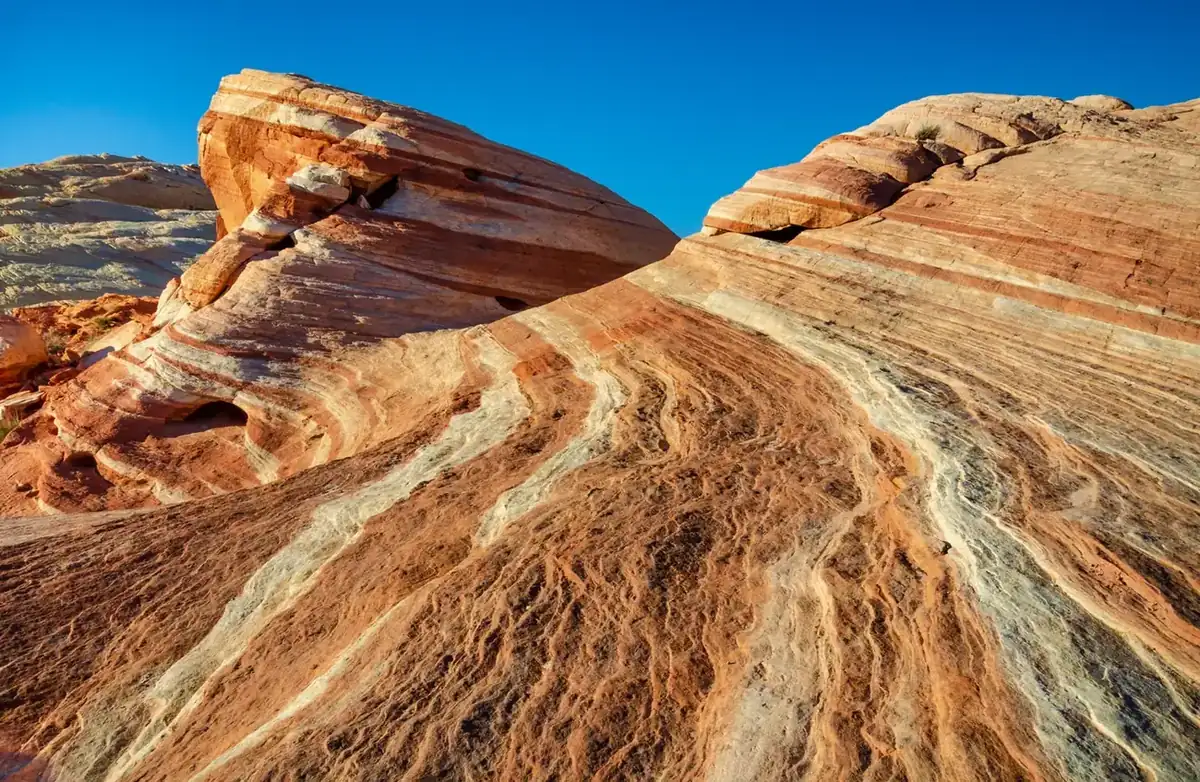
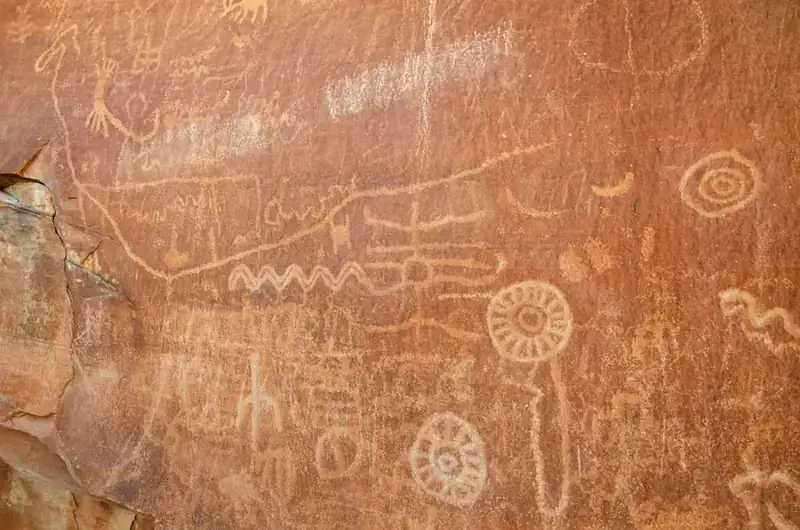
World-renowned for its 40,000 acres of colorful sandstone features and powerful connections to native history, Valley of Fire contains ancient rock formations, petrified trees, and petroglyphs dating back thousands of years.
Ancient man moved into southern Nevada as far back as 11,000-years-ago. The most obvious evidence of occupation are the 2,500-year-old petroglyphs carved into the rocks by the Basketmaker culture. They were followed later by the Early Pueblo peoples.
The natural landscape consists primarily of red sandstone buttes and oddities amidst large, yellow limestone outcroppings. However, the park features a rainbow hue of patterns and formations. Each trail and overlook provides a unique way to experience the setting. The rocks date to the Jurassic period and are the remnant of sands left behind by the wind after inland seas subsided and the land rose. Over time, the muds of the drying seas cemented into the colorful layers seen today.
The most popular sites at Valley of Fire are the painted desert features at sites like the Fire Wave, and the impressive natural bridges of Elephant Rock and Rock Arch. Water, wind, and time are the authors of this environment, and the exposed layers of rock often look like the pages of a book carved into the terrain.
Via the dozens of miles of hiking trails, visitors can experience slot canyons, enormous domes, native rock art, and a former movie set. Rock climbing and rappelling are available in specific areas, giving the more adventurous a way to view the entire park. For those who have difficulty navigating the rocky and sandy terrain, a few trails have been designed to accommodate accessibility. The park roads and campsites also display exceptional scenery if you'll be making a brief visit or relaxing into the night with a spectacular desert backdrop.
In 1933, the Civilian Conservation Corps built the first facilities and campgrounds in the park. Valley of Fire formally opened as Nevada's first state park in 1934 and has grown substantially over the years.
Valley of Fire already feels like a National Park, except in designation. It's off the beaten track, has numerous trails and overlooks, and showcases a wide array of sites to visit. It became the state's first state park for a reason; It is an unquestionable natural wonder. It deserves greater recognition and further expansion. A possible designation as a National Park could provide all of that and give Nevada its second park after the establishment of Great Basin National Park in 1986.
Nevada has kept it intact, and that is a foundation rather than an obstacle. The state took the land by patent in 1931 and made it Nevada's first state park in 1935, and what it has protected since would rank with anything in the system. Ownership is not the test: Canyon de Chelly is a park unit on Navajo land, and the Atchafalaya proposal in Louisiana was argued as a park built out of state and federal pieces. Valley of Fire deserves to stand with the National Parks, and there is more than one way to get it there.
The crowds have already arrived at park volume. The lots at the Fire Wave and the White Domes fill by mid-morning on a spring weekend, an hour from a city of two and a half million, on a road and a staff sized for a state park budget. That gap between what the place draws and what it is funded to handle is one of the better arguments for the designation rather than against it.
The setting helps the case. Lake Mead National Recreation Area wraps the park on the east, so a park boundary would not be an island in private land the way most proposals on this list would be. That is rare enough on this list to be worth saying out loud.
The history of National Park Campaigns
Nevada took the state route from the start: Gov. James Scrugham's 1923–25 state recreation-grounds program targeted the valley, the federal government patented the land to Nevada on November 30, 1931, and it opened in 1934 as the state's first state park (formalized 1935). Local promoters in the 1920s speculated it might "eventually become a National Park," but no proposal was ever made.
- Distinct National Park attempts
- 0
- Other designation attempts
- state park 1931–35; NNL 1968
Sources
- Nevada State Parks history
- Valley of Fire State Park: Nevada's First State Park (NSP)
- Lost City Museum records
- 1923–25
Scrugham's state recreation-grounds program identifies Valley of Fire; road-boosters suggest a future National Park.
- November 30, 1931
Federal land patent to Nevada.
- 1934
Park opens; 1935 — Nevada's first state park (legislation).
- 1968
National Natural Landmark.
- 2016
Adjacent Gold Butte National Monument (BLM); 2022 — Lake Mead NRA/Valley of Fire management continues; no park proposal.