- Location
- Pennsylvania/New York
- Current protection
- Allegheny National Forest, Kinzua Bridge State Park, Drake Well State Park (PA)
- Status
- Active citizen campaign
- In the book
- Featured in Undiscovered America
Why should it be a National Park?
The Allegheny region spans seven counties, five in northwestern Pennsylvania and two in southwestern New York, and is one of the most bypassed sections of the eastern United States. Unlike much of the east, this area has no major cities, popular battlefields, or well-known historic sites. Because of this isolation, the natural environment in the region remains similar to the way the first settlers would have experienced it.
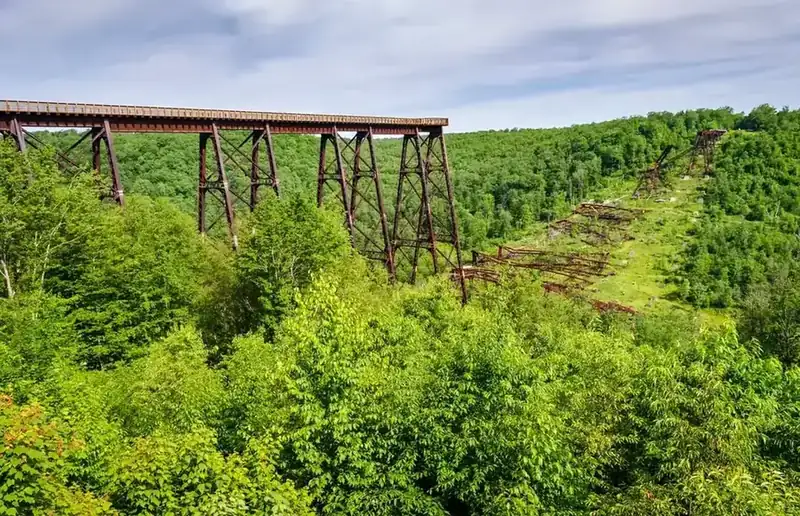
Allegheny is overlooked despite having significant but forgotten connections to American history. This area is home to Drake Well, which in 1859 became the world's first functioning oil well and resulted in the first oil boom. Kinzua Bridge, built in 1882 and at a height of 300 feet, was once the tallest railroad bridge on the planet, but in 2003 a tornado struck the bridge, leveling half of the steel structure. A glass-bottomed observation deck was built at the edge of the remaining bridge, giving visitors a view of the wreckage. The only Revolutionary War battlefield in western Pennsylvania is located on Thompson Island in the Allegheny River. Additionally, Johnny "Appleseed" Chapman, more than just folklore legend, lived in this region during his mission of planting apple trees across America.
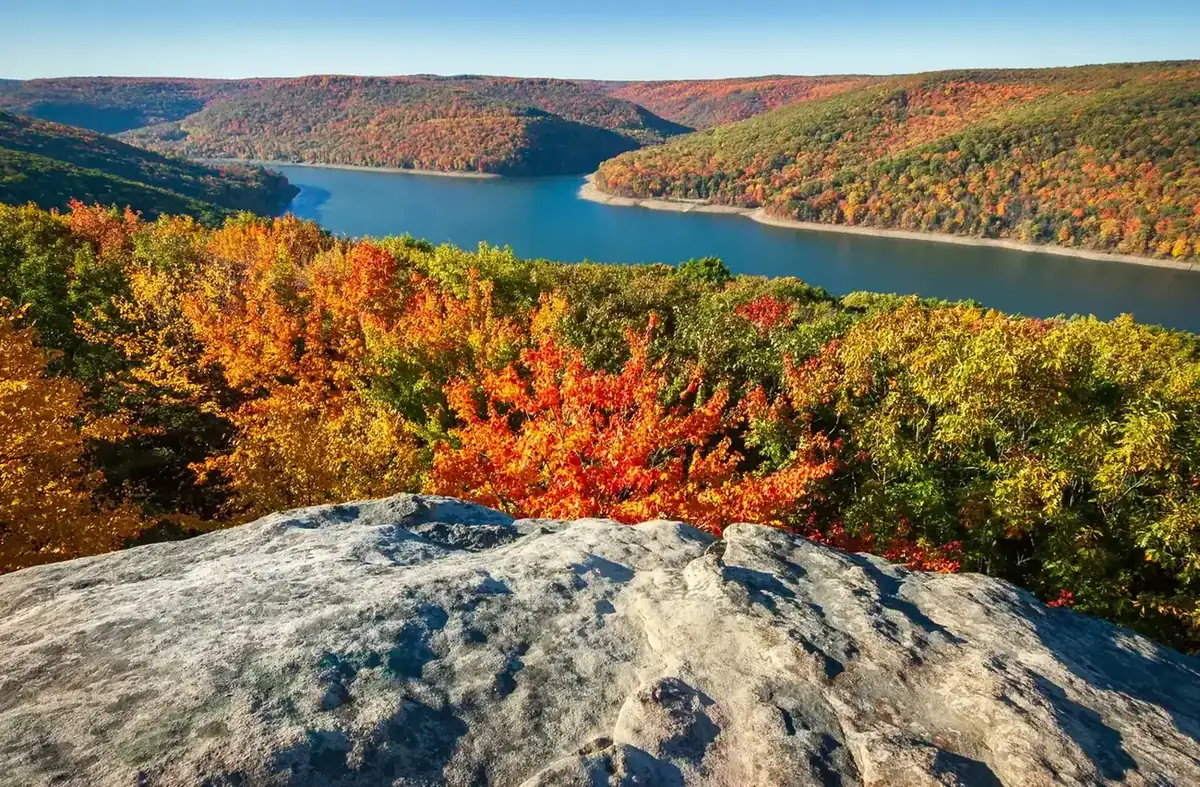
While this forgotten history is fascinating, Allegheny's true distinction is its scenery. The nearly one million acres of dynamic terrain is the work of hundreds of waterways that carved their way through these forested mountains. During autumn, the thick, tall trees found on these hills glow in reds, oranges, and yellows that rival any fall foliage in the country. The forest stands in sharp contrast to better-known places like New England, where the changing leaves are almost always seen alongside farms and paved roads.
Allegheny has long been a destination for hikers, as those visiting the region can experience a number of changes in terrain, including impressive sections of old-growth forest and towering rock cliffs. While hundreds of miles of trails exist, the most prominent is the North Country National Scenic Trail, of which over 100 miles passes through Allegheny. The trail begins in Vermont and stretches approximately 4,800 miles through eight states before terminating in North Dakota. The region is also home to local hero Howard Zahniser, who conceived of what would become the Wilderness Act of 1964, designating millions of acres across America as roadless areas that must remain in their natural state. Although Allegheny gave birth to the idea of Wilderness preservation, almost none of this landscape is protected in this manner. National Parks protect only 13% of all federal lands, but within those lands are 40% of all Wilderness areas. Strangely, the land that inspired the Wilderness Act has received so little of its protection.
The history of National Park Campaigns
The Allegheny plateau was protected as a national forest (1923) and, on the NY side, as Allegany State Park (1921). It has never had a formal federal national-park bill. Modern activity centers on the citizen-led Allegheny National Park Campaign (2010s, ~1,000,000 acres) and, earlier, the Friends of Allegheny Wilderness Citizens' Wilderness Proposal (2003, 54,460 acres). Designations achieved include the Hickory Creek and Allegheny Islands Wilderness Areas (1984) and Allegheny River / Clarion River Wild & Scenic segments.
- Distinct National Park attempts
- 1 (2010s citizen campaign — no bill)
- Other designation attempts
- 3+ (2003 wilderness proposal; 1984 wilderness designations achieved; state park 1921)
Sources
- Friends of Allegheny Wilderness, A Citizens' Wilderness Proposal (2003)
- Allegheny National Park Campaign site
- ANF Land & Resource Management Plan (1986 and revisions)
- Pennsylvania Wilderness Act of 1984 legislative record
- 1921
Allegany State Park (NY) established. State park, not a national-park proposal.
- 1923
Allegheny National Forest (PA) established under Weeks Act authority (over half a million acres; 513,000-acre figure used in the 2003 wilderness proposal).
- 1965
Kinzua Dam completed, flooding Seneca lands (Cornplanter Tract) in breach of the 1794 Treaty of Canandaigua; the fight did not produce a national-park proposal.
- 1984
Pennsylvania Wilderness Act: Hickory Creek Wilderness and Allegheny Islands Wilderness (~9,000 acres total) designated; sponsors Rep. Bill Clinger, Sens. Arlen Specter and John Heinz. The same law created the Allegheny National Recreation Area (23,100 acres).
- Sept. 2003
Friends of Allegheny Wilderness, "A Citizens' Wilderness Proposal for Pennsylvania's Allegheny National Forest" — identified 54,460 acres in eight tracts (in Elk, Forest, McKean, and Warren counties) for wilderness plus ~14,477 acres for national recreation areas, timed to the ANF's Forest Plan revision. Source: pawild.org / riversofsteel.com PDF.
- 2010s
Allegheny National Park Campaign (alleghenynationalpark.com) — proposes a National Park of "nearly one-million acres of northwestern Pennsylvania and southwestern New York state," billed as "an ideal proposal for the first National Park between the Atlantic Ocean and the Great Lakes." Source: alleghenynationalpark.com.