- Location
- Georgia/Florida
- Current protection
- Okefenokee National Wildlife Refuge, Okefenokee Wilderness, Stephen C. Foster State Park
- Status
- No active campaign
- In the book
- Not featured in Undiscovered America
Why should it be a National Park?
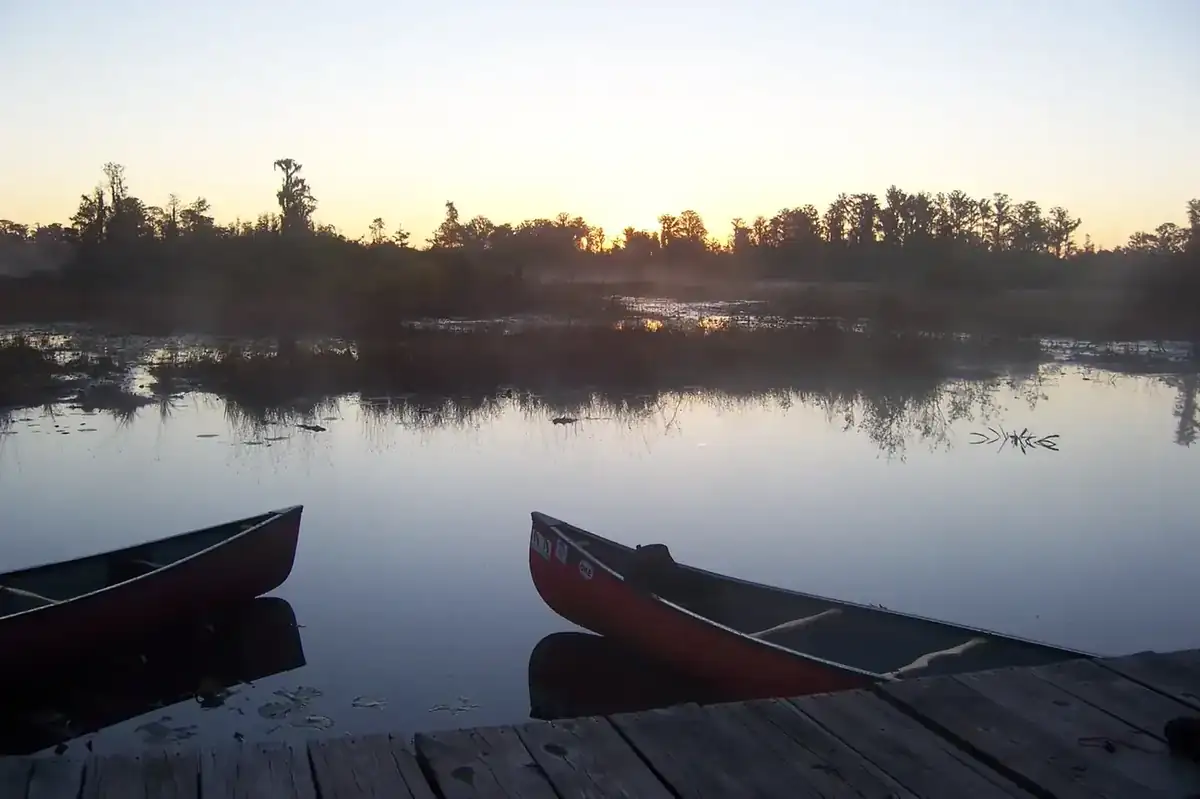
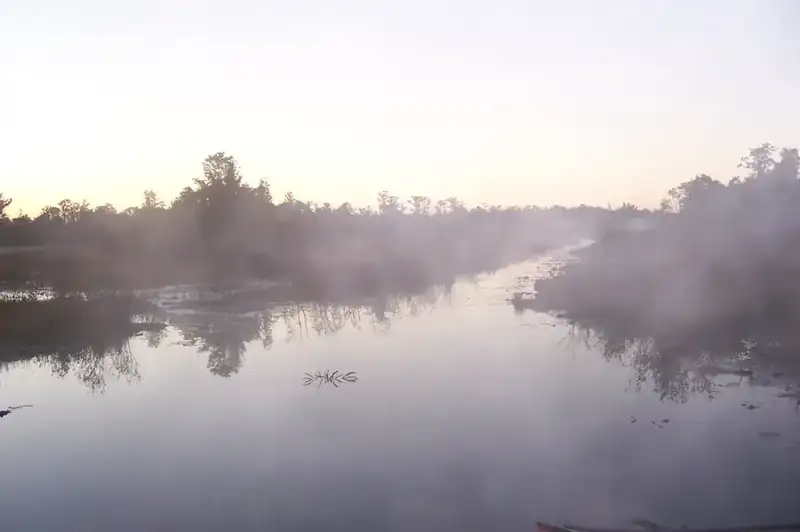
The Okefenokee is the largest blackwater swamp in North America, four hundred thousand acres of peat bog sitting in a shallow basin behind an ancient sand dune called Trail Ridge. The water is the color of strong tea, stained by tannins from decaying vegetation, and it is so still that the cypress and the sky reflect in it perfectly. The name comes from a Hitchiti word usually translated as trembling earth, because the peat floats, and islands in this swamp shift underfoot.
Two rivers begin here. The Suwannee runs southwest to the Gulf, the St. Marys east to the Atlantic. In between are prairies of water lilies, cypress domes, and sandy islands where people farmed until the 1930s. Something like twelve thousand alligators live in the swamp. Sandhill cranes nest here, along with more than two hundred other bird species, and the night sky above it is among the darkest east of the Mississippi.
It was nearly destroyed twice. The Suwannee Canal Company tried to drain the whole thing in the 1890s and went bankrupt; the ditch it left is still called the Suwannee Canal, and locals called the effort Jackson's Folly. Then loggers took most of the old-growth cypress between 1909 and 1927. Roosevelt made it a wildlife refuge in 1937, and Congress designated most of it wilderness in 1974.
In 1929 Congress directed a study of an Okefenokee National Park. The refuge came instead, and no park bill has been filed since. The recent fight has been about something else entirely: a titanium mining company wanted to dig on Trail Ridge, the sand dune that holds the swamp's water in place. Nearly two hundred thousand people filed comments against it. In June 2025 the Conservation Fund bought the mine site and its mineral rights for close to sixty million dollars, ending the threat. A year later UNESCO inscribed the swamp as a World Heritage Site. The Okefenokee has world standing, a global designation, and still no National Park.
The history of National Park Campaigns
A 1929 study bill (H.R. 17277, 70th Congress) directed study of an Okefenokee National Park; the outcome was instead a national wildlife refuge in 1937 and wilderness designation in 1974. No park bill has followed. The recent story is the Twin Pines Minerals titanium mine on Trail Ridge: after roughly 200,000 opposition comments, The Conservation Fund announced in June 2025 a nearly $60 million purchase of the mine tract and mineral rights, and the refuge was inscribed as a UNESCO World Heritage Site in July 2026.
- Distinct National Park attempts
- 1 (1929 study bill)
- Other designation attempts
- 4 (refuge 1937; wilderness and National Natural Landmark 1974; mine buyout 2025; World Heritage inscription 2026)
Sources
- H.R. 17277, 70th Congress (1929)
- The Conservation Fund announcement, June 20, 2025
- U.S. Fish and Wildlife Service, Okefenokee NWR Comprehensive Conservation Plan
- Chris Trowell and Okefenokee Swamp Park historical collections
- 1890s
The Suwannee Canal Company attempts to drain the swamp and fails; the canal remains.
- 1909–1927
Logging removes most of the old-growth cypress.
- 1929
H.R. 17277 (70th Congress) directs a study of an Okefenokee National Park.
- March 30, 1937
President Roosevelt establishes Okefenokee National Wildlife Refuge by executive order.
- 1974
Congress designates the Okefenokee Wilderness, 353,981 acres, the third largest wilderness east of the Mississippi; National Natural Landmark designation follows.
- 2019–2024
Twin Pines Minerals pursues titanium and heavy-sands mining on Trail Ridge; roughly 200,000 comments are filed in opposition and Georgia EPD issues draft permits in February 2024.
- June 20, 2025
The Conservation Fund announces a purchase of roughly 7,765 acres including the mine tract and mineral rights for nearly $60 million, ending the threat.
- July 25, 2026
The UNESCO World Heritage Committee, meeting in Busan, South Korea for its 48th session, inscribes the Okefenokee National Wildlife Refuge on the World Heritage List under natural criteria (ix) and (x). It is the first national wildlife refuge in the United States to be listed and Georgia's first World Heritage Site. The nomination process began in 1982.