- Location
- Arizona
- Current protection
- Organ Pipe Cactus National Monument, International Biosphere Reserve
- Status
- No active campaign
- In the book
- Featured in Undiscovered America
Why should it be a National Park?
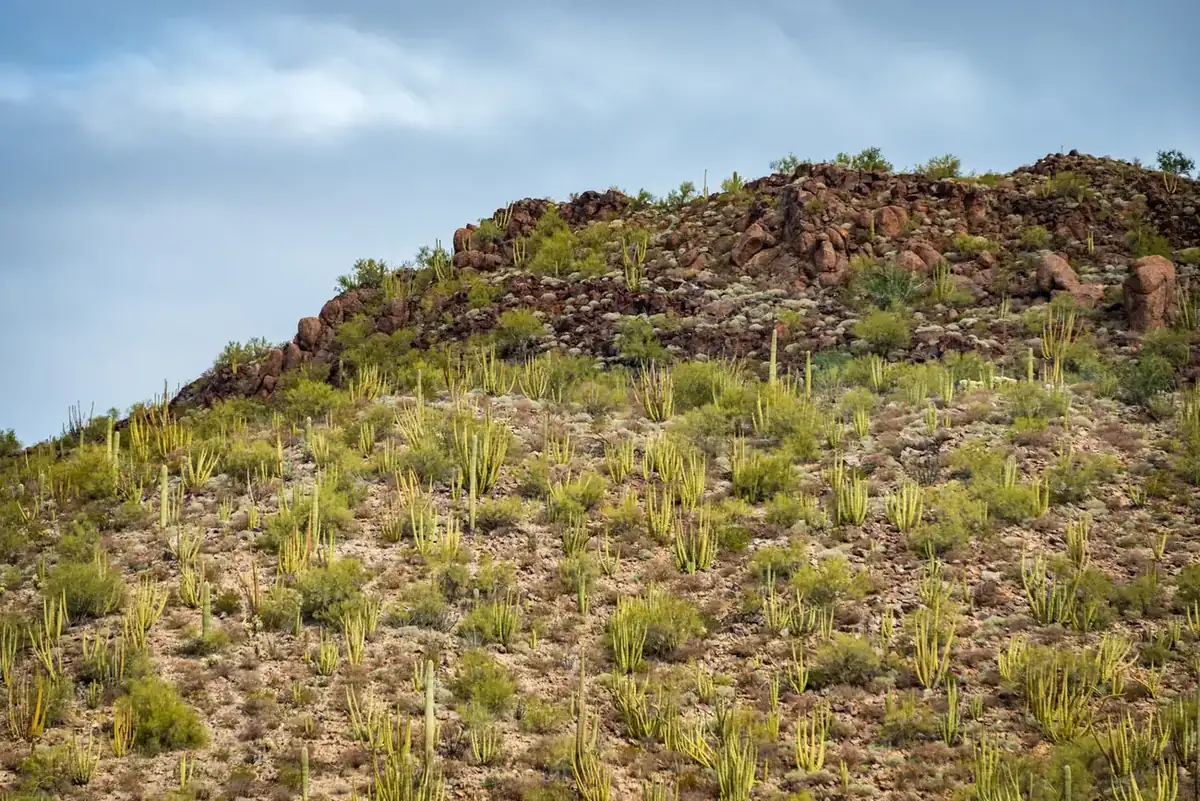
Located north of the Mexican border in southern Arizona is Organ Pipe Cactus National Monument. This 517-square-mile monument was set aside to preserve a pristine example of Sonoran Desert habitat. This is the only place in the United States that the Organ Pipe Cactus grows in large quantities.
Designated as an International Biosphere Reserve, this area has a thriving community of plants and animals. Human stories also echo throughout this preserve, chronicling thousands of years of desert living. While the plants, animals, and humans who have called this region home for millennia may have adapted to the environment, visitors will find the hot, dry landscape a challenging experience.
Although this section of the Sonoran Desert is federally protected, its size and location along the Mexican border result in it being both overlooked by travelers and overrun by border agents.
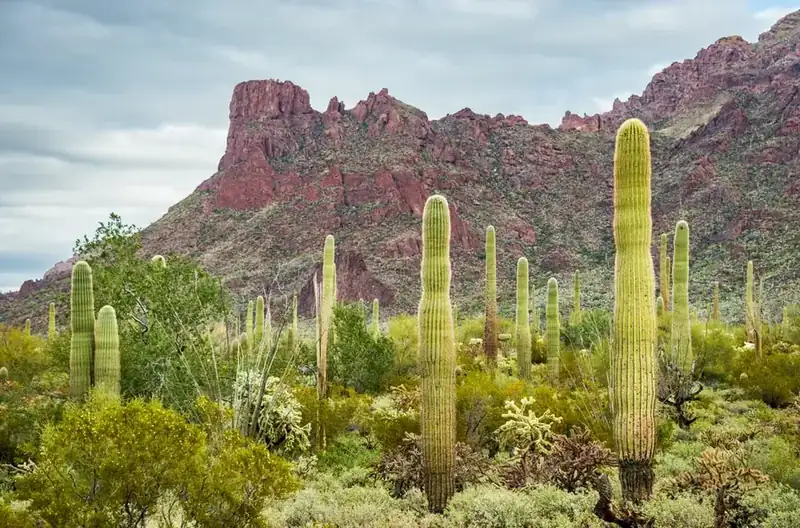
Tourists can experience a well maintained 21 mile dirt road with views of tall buttes and towering cactus. There are a few paved roads like State Route 85, the primary route through the monument, but most are dirt or gravel. The popular Arch Canyon Trail leads to Mount Ajo 4,000 feet above the desert floor and views of the arch itself. Petroglyphs also cover the area and are remarkably well preserved for being exposed to the elements for hundreds of years.
This region was heavily mined for silver. Jeff Milton, who was the first United States Immigration agent in this area, discovered a large ore body and began his Milton Mine operation. Following the success of Milton, the New Cornelia Mining Company followed suit, and the area saw economic growth. This was also a popular grazing site for cattle, so a border wall was erected to stop the flow of cattle between nations.
The 1990s saw a rise in Mexican cartel activity as the isolation of the monument aided illegal immigrants with a low-risk border crossing. Park ranger Kris Eggle was killed in the line of duty chasing down Mexican thugs who fled into America after going on a murder streak. The suspect only received 15 years in prison. Eggle has been credited with intercepting tons of cartel drugs and weapons. The Organ Pipe Cactus Visitor Center was renamed to commemorate Eggle's sacrifice and service.
The average American doesn't know what an Organ Pipe Cactus is, let alone that we have a rare and incredible natural asset in such abundance in southern Arizona. Elevating awareness for this unique and desolate environment could go a long way in educating about the diversity and grandeur of the American landscape and bringing attention to difficulties along the border. Increased visitation and conservation could bring greater attention and infrastructure, making this garden of cacti less appealing for illegal activity.
The history of National Park Campaigns
The Park Service itself proposed a Sonoran Desert National Park in 1965: after the Advisory Board flagged mining damage (1962), a four-man NPS team spent five days in the area in January 1965, the Southwest Region published Sonoran Desert National Park, Arizona: A Proposal (May 1965), and Secretary Udall endorsed a 1,242,000-acre park combining Organ Pipe and the Cabeza Prieta Game Range on January 7, 1966. President Johnson never acted. The University of Arizona's Sonoran Desert National Park Project revived a 5,000-square-mile version around 1999–2005.
- Distinct National Park attempts
- 2 (1965–66 NPS/Udall; c. 1999–2005 UA project)
- Other designation attempts
- monument 1937; wilderness 1978; biosphere 1976
Sources
- NPS, Sonoran Desert National Park, Arizona: A Proposal (May 1965) — full text online
- Bill Broyles & Charles Bowden, Sonoran Desert National Park Project materials (UA Southwest Center)
- organpipehistory.com
- April 13, 1937
Organ Pipe Cactus National Monument (FDR); 1939 — Cabeza Prieta Game Range.
- 1962
Advisory Board on National Parks urges action on mining damage in the monument.
- January 1965
NPS four-man inspection team, five days in the field; May 1965 — Sonoran Desert National Park, Arizona: A Proposal (NPS Southwest Region): "The members of the team were greatly impressed with the possibilities of creating a superlative National Park"; the report catalogs grazing (since ~1919) and mining as threats. (nps.gov/parkhistory/online_books/sonoran_desert)
- January 7, 1966
Udall press release "endorsed enthusiastically" the ~1,242,000-acre park including an 80,000-acre Tinajas Altas extension: "This area would provide a National Park of superlative quality." Johnson does not act; the Air Force's Goldwater Range and Interior–DoD conflicts figure in the outcome. (Arizona Highways, 1965; NPS)
- 1976
UNESCO Biosphere Reserve; 1978 — Organ Pipe Cactus Wilderness (312,600 acres, P.L. 95-625); 1990 — Cabeza Prieta NWR wilderness.
- c. 1999–2005
Sonoran Desert National Park Project (UA Southwest Center; Joseph Wilder, Bill Broyles, Charles Bowden, Jack Dykinga; Stewart Udall's blessing): a ~5,000-square-mile park uniting Organ Pipe, Cabeza Prieta, and the Goldwater Range with Mexico's Pinacate reserve. No bill. (DesertUSA; Sunset)
- 2000s–2020s
Border security dominates; no redesignation activity.