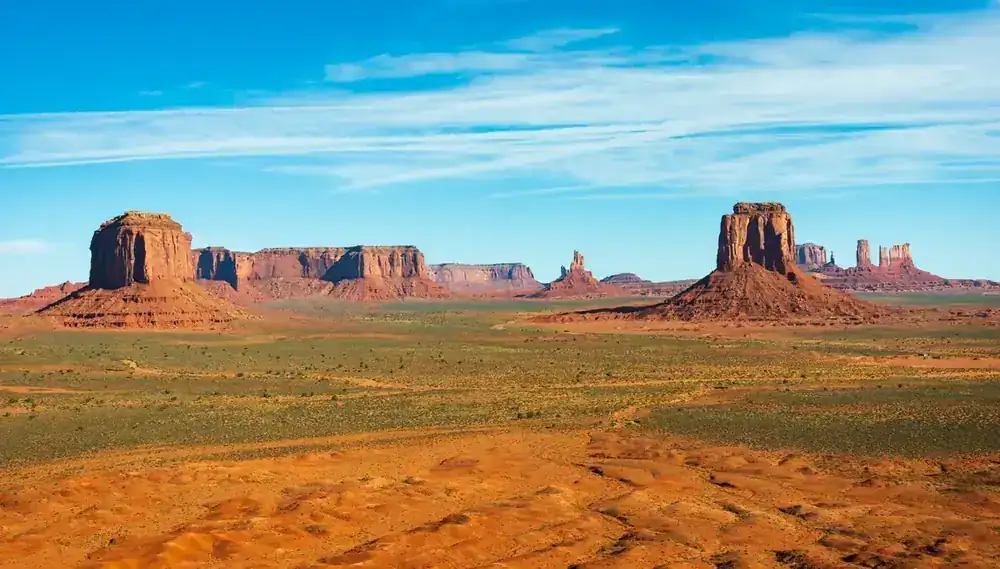
- Location
- Navajo Nation/Arizona/Utah
- Current protection
- Monument Valley Navajo Tribal Park, US-163
- Status
- No active campaign; tribal park
- In the book
- Featured in Undiscovered America
Why should it be a National Park?
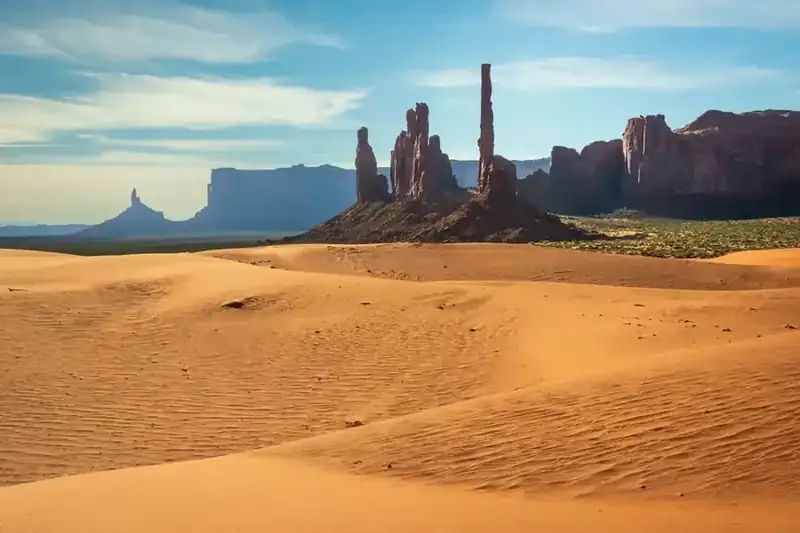
This sprawling desert landscape of red rock mesas and buttes is as famous as it is beautiful. Publicized in westerns, commercials, desktop backgrounds, and calendars the world over, Monument Valley is so picturesque and iconic that it's almost pointless to describe its beauty or unique character.
Because of its prominence, it's also hard to make the argument that Monument Valley is an undiscovered landscape, however, this may be the most iconic and easily identifiable setting in North America that is not a National Park.
It would be an oversight if I didn't mention that the proper name of this spectacular setting is 'Monument Valley Navajo Tribal Park', and it is the Navajo Nation equivalent of a National Park. The central premise of this book is to elevate areas worthy of being National Parks, whether they are unknown or simply deserving and unrecognized as such. Here, I believe that Monument Valley is clearly deserving of being recognized as the peer of any National Park.
Also located in Arizona is Canyon de Chelly National Monument, which is interpreted by the National Park Service, but the canyon remains tribally owned and occupied by the native inhabitants. This model could work at Monument Valley as well. The creation of a Monument Valley National Park could give another level of recognition to this deserving natural wonder without altering the management or ownership of it.
While Monument Valley is well-known because of its aforementioned fame, the truth is that this area is sparsely populated and doesn't draw in as many visitors as it could. There is a small tourism industry that revolves mainly around a large visitor center with shops, locals selling tribal wares, and tours... but increased visitation may bring the struggling region into a better financial situation. At the same time there is a portion of the community that cherishes their separation from modern crowded culture, and rightfully so. National Parks have always had the struggle of showcasing their grandeur to visitors, while also remaining unchanged by the same increased visitation.
Obviously, this idea of including Monument Valley alongside the other equally impressive and important sites recognized by the National Park Service would be controversial, but if considered, it would also unify the best natural landscapes across the American landmass. The National Parks label should be available to all the iconic natural wonders across the country, regardless of who manages them. It has worked at Canyon de Chelly, and if wanted by the Navajo, it could work here.
The history of National Park Campaigns
A National Park was proposed for Monument Valley in 1931 (Roger Toll's "Navajo National Park," backed by Director Albright) and again through a 1933 bill to expand Navajo National Monument into a large park; both died against Navajo opposition, and in 1958 the Navajo Nation created its own tribal park instead — the model for the Diné park system.
- Distinct National Park attempts
- 2 (1931; 1933)
- Other designation attempts
- tribal park 1958
Sources
- NPS Canyon de Chelly NM Administrative History
- Hal Rothman, Navajo National Monument: A Place and Its People (1991)
- Navajo Nation Parks & Recreation history
- 1909
Navajo National Monument (Betatakin/Keet Seel); 1910 Rainbow Bridge NM.
- 1931
Toll/Albright "Navajo National Park" (Monument Valley + Canyon de Chelly, with Navajo and Rainbow Bridge NMs as detached units); rejected by Commissioner of Indian Affairs Charles Rhoads; Albright separately declares Monument Valley a candidate for federal protection after a 1931 inspection.
- 1933
Bill to expand Navajo National Monument into a large park, defeated by Navajo Tribal Council opposition over residents and grazing. VERIFY number/sponsor.
- 1933–38
Rainbow Bridge–Monument Valley Expeditions (Ansel Hall), scientific surveys; do not credit them with the park proposal unless confirmed.
- 1939
John Ford's Stagecoach makes the valley famous; Harry Goulding's trading post.
- 1958
Navajo Tribal Council creates Monument Valley Navajo Tribal Park (29,817 acres; $275,000 appropriation), the first tribal park.
- 1960s–2020s
Navajo Nation Parks & Recreation expands the system (Four Corners, Lake Powell, Antelope Canyon, Little Colorado River tribal parks); no federal park proposal since.