- Location
- Utah
- Current protection
- San Rafael Swell, Goblin Valley State Park, The Wedge/Little Grand Canyon
- Status
- No active campaign
- In the book
- Featured in Undiscovered America
Why should it be a National Park?
Utah famously has the "mighty five" National Parks of Zion, Bryce Canyon, Capitol Reef, Canyonlands, and Arches that extend across the southern half of the state. However, the San Rafael Swell, a large geologic area in central Utah, should be added to the National Park Service as a sixth National Park to better represent the world-class scenery that the state has to offer.
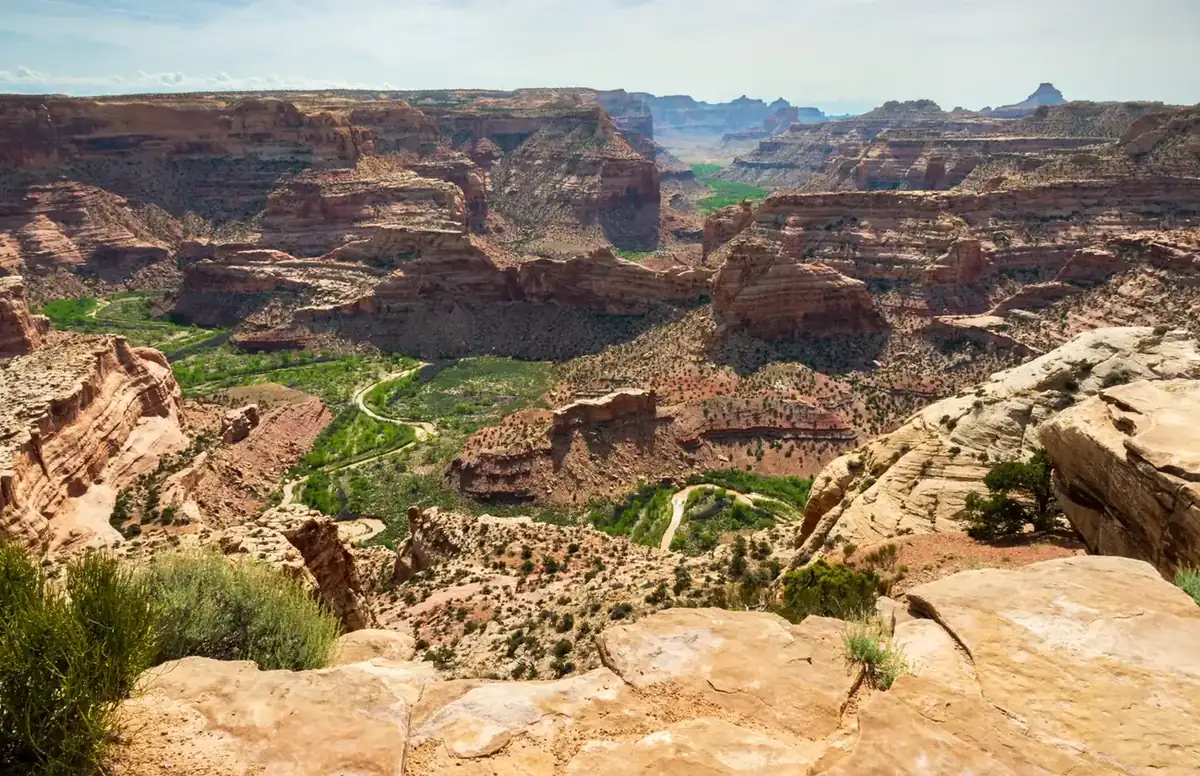
The San Rafael Swell's continuous ridges, buttes, slot canyons, painted deserts, ruins, canyons, arches, and rock towers play like the greatest hits of the Colorado Plateau. The natural diversity is paired with a rainbow of colors that reflect the complex and detailed history of geologic ages. The colors of sandstone can shift from red to orange to yellow with the painted desert areas showcasing purples, blues, and whites. Because of the varied landscape, people do not recognize this region of differing characteristics as telling a unified geological story.
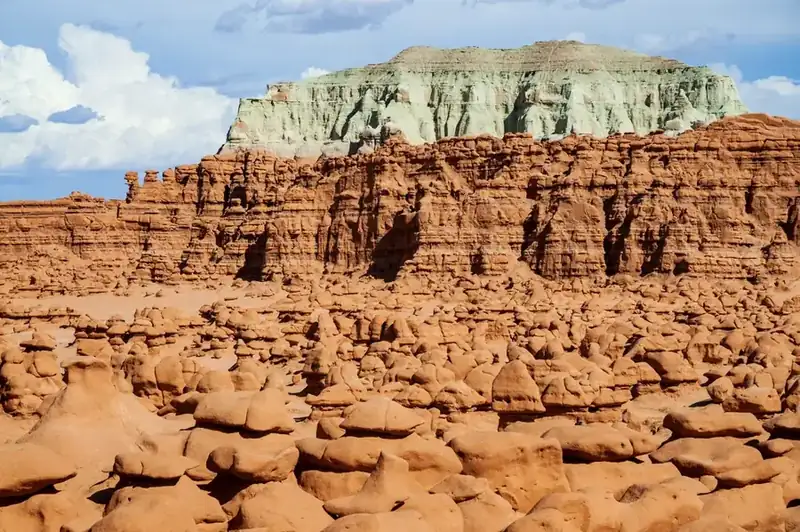
A few spots in San Rafael do receive notoriety because of just how unique they are, even within the greater diversity of the region. Goblin Valley is perhaps the most renowned. This 3,654 acre state park protects a valley of mushroom-shaped rock hoodoos and other formations. Its otherworldly appearance has made it a popular filming location for movies, such as 'Galaxy Quest' and 'The Tree of Life'.
Another section well-known to adventurers, but virtually unknown to the public-at-large, is a canyon system with the nickname the "Little Grand Canyon". This canyon could be the centerpiece of any National Park, however, the isolation of the best viewpoints leaves it off most maps. The best place to visit the canyon is the Wedge Overlook, which lies at the end of a difficult to find dirt road. Arriving here for the first time makes you feel like you joined a western expedition in the days before western expansion.
In addition to the impressive rock arches and strange natural features, native ruins and rock art can be found throughout the region. Many are easily accessible from Interstate 70, the only major highway that passes through the desert. Guidebooks and websites can guide travelers to singular natural vistas, but without the larger narrative of the San Rafael Swell you miss out on the cohesive natural story of the environment.
The San Rafael Swell has been considered for virtually every level of conservation in the federal government. In the 1980s, studies were conducted to see if the region was worthy of becoming a National Park. The rural and conservative nature of the region often means these proposals fall flat.
The history of National Park Campaigns
The Swell has been proposed for nearly every designation except a successful National Park: a 1930s regional "Wayne Wonderland" park concept, 1990s heritage/conservation-area bills, a 620,000-acre monument that a governor requested and a president declined, and finally a 2019 omnibus that delivered a recreation area and wilderness instead.
- Distinct National Park attempts
- 2 (1935 regional "Wayne Wonderland" park; Emery County Development Council's ~210,000-acre park idea)
- Other designation attempts
- 6+ (1998 heritage/conservation-area bills; 2002 monument; 2016 PLI; 2018 Jurassic NM; 2019 recreation area + wilderness)
Sources
- H.R. 3625 and H. Rept. 105-685 (govinfo.gov)
- House hearing Serial 105-85 (commdocs.house.gov)
- P.L. 116-9
- Utah Geological Survey, "San Rafael Swell Proposed as Site of New National Monument" (Doelling & Hylland)
- High Country News issues 179 and 220
- SUWA campaign pages
- 1935
The Utah State Planning Board proposes a ~360,000-acre "Wayne Wonderland" National Park in the region (centered nearer present Capitol Reef in Wayne County). A distinct, Swell-specific 1930s "San Rafael Swell National Park" bill/hearing is UNVERIFIED — the related 1930s NPS southern-Utah initiative of the era was the proposed (never enacted) Escalante National Monument (1935–40).
- 1936
Bob Marshall (Wilderness Society) identifies ~2 million acres of roadless land near the Swell.
- 1964
Goblin Valley State Park.
- 1980
Interior identifies seven potential National Natural Landmark sites in the area (BLM wilderness inventory era).
- April 1, 1998
Rep. Chris Cannon (R-UT-3) introduces H.R. 3625, the "San Rafael Swell National Heritage and Conservation Act" (105th Cong.) — Title I a National Heritage Area, Title II a National Conservation Area with several wilderness units. Sen. Orrin Hatch files a companion. Subcommittee hearing April 23, 1998 (Subcommittee on National Parks and Public Lands, Serial No. 105-85, Rep. James Hansen presiding); reported with amendment Aug. 7, 1998 (H. Rept. 105-685). It "satisfied no one" and languished. Note: this sought a Heritage/Conservation Area, not a National Park.
- January 28, 2002
In his State of the State, Gov. Mike Leavitt endorses the Emery County Public Lands Council's proposal for a ~620,000-acre San Rafael Swell National Monument. President George W. Bush never acts. The county-driven monument idea loses traction amid Utah's anti-federal-land politics; SUWA opposed the inadequate boundaries. (Wikipedia; HCN, "Groundswell for a monument?"; Utah Geological Survey.)
The Emery County Development Council also floated a ~210,000-acre National Park for the northern Swell. (National Parks Traveler.)
- 2016
Emery County proposal folded into Rep. Rob Bishop's failed Public Lands Initiative.
- May 2018
Rep. John Curtis (R-UT) and Sen. Hatch introduce legislation including a Jurassic National Monument (Cleveland-Lloyd Dinosaur Quarry).
- March 12, 2019
Emery County Public Land Management Act, enacted within the John D. Dingell Jr. Conservation, Management, and Recreation Act (P.L. 116-9): creates the San Rafael Swell Recreation Area (217,000 acres), ~663,000 acres of wilderness (Labyrinth, Muddy Creek, San Rafael Reef, etc.), Jurassic National Monument, a Goblin Valley SP expansion, and Green River/Labyrinth Canyon Wild & Scenic segments. SUWA called it "the most significant legislative victory in SUWA's history" and noted it "defeated six prior proposals" for the Swell.