- Location
- California
- Current protection
- Mount Shasta, Lava Beds National Monument, Shasta–Trinity National Forest
- Status
- No active campaign
- In the book
- Featured in Undiscovered America
Why should it be a National Park?
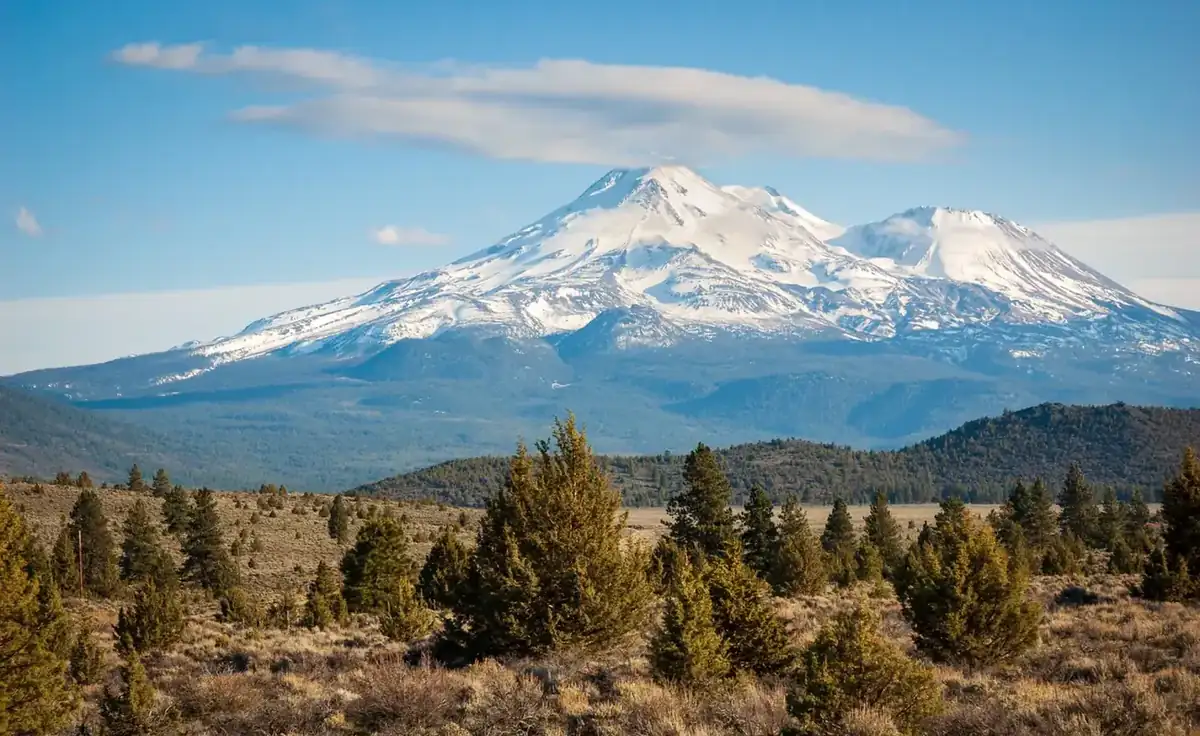
John Muir is known as the father of Yosemite National Park, but he was also the champion of two other spectacular natural icons that didn't end up becoming National Parks, much to his disappointment. Lake Tahoe and Mount Shasta could be considered Muir's failures, but that has the potential to change.
Mount Shasta dominates the landscape of Northern California. This potentially active volcano at the southern end of the Cascade Range reaches an elevation of 14,179 feet, with an incredible prominence of 9,823 feet over the surrounding landscape. That elevation makes it an ideal place for skiing and hiking.
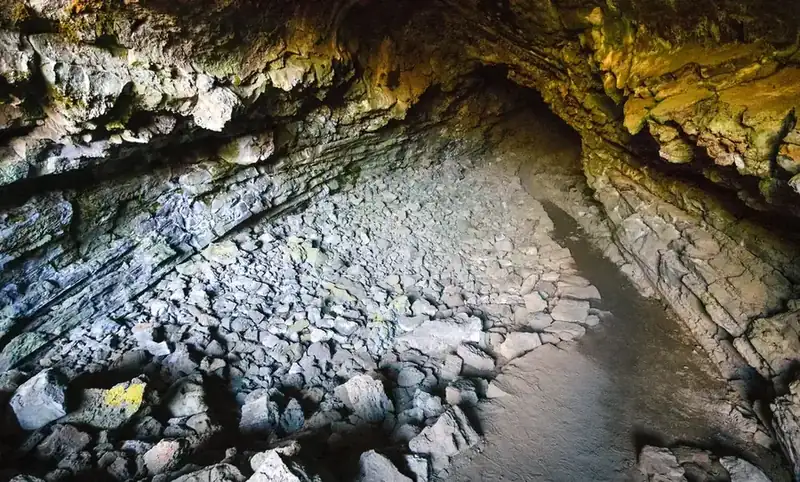
Roughly 50 miles northeast of the mountain is Lava Beds National Monument. Lava Beds is a land of turmoil, both geological and historical. Over the last half-million years, volcanic eruptions on the Medicine Lake shield volcano have created rugged terrain dotted with diverse volcanic features. Over 800 caves dot the area, many offering trails that travel through them. These caves are actually lava tubes; the remnants of flowing lava that carved tunnels through the ground.
Lava Beds is also home to an extensive Native American history with rock art sites and historic battlefields. The winter of 1872-1873 was a troubled one here. A small band of Modoc Indians were besieged by U.S. Army forces, who outnumbered them as much as ten to one. Most of the battlefields in this conflict, known as the Modoc War, are located within the monument and are still preserved today. Unique monuments acknowledge both sides of the conflict and its regrettable history.
Areas between Mount Shasta and Lava Beds are populated by the thick wilderness of the Shasta-Trinity National Forest and multiple national wildlife refuges. Each is beautiful and adds a dimension to the varied landscape of north-central California.
In a state like California where outdoor tourism is a primary focus, this volcanic region often goes overlooked. The volcanic legacy of this northernmost section of the state carries with it a series of protected lands throughout the Departments of Interior and Agriculture. Several agencies lay claim to these volcanic, scenic, and historical wonders at the southernmost point of the Cascade Mountains, but unifying them under one designation could not only bring a greater appreciation for the region but also fulfill John Muir's dream. Maybe then everyone could see why Muir made a dozen trips to the region between 1874 and 1914.
John Muir first championed the idea of creating a 'Mount Shasta National Park', and in 1912, 1913, and 1925 legislation was put forward in Congress, but ultimately failed.
The history of National Park Campaigns
Mount Shasta has one of the oldest park-movement paper trails in the West — Muir in 1888, a booster campaign in 1912, and three failed Raker bills (1912, 1913/14, 1925) — all defeated by timber interests and, decisively, by the eruption of Lassen (which was made a park instead). The region's most recent protection is the Sáttítla Highlands National Monument (2025).
- Distinct National Park attempts
- 3–4 (1912 H.R. 22353; 1913/14 H.R. 12408; 1925 bill; plus the 1888–1895 booster origins)
- Other designation attempts
- 3 (Lava Beds NM 1925; Mount Shasta Wilderness 1984; Sáttítla Highlands NM 2025)
Sources
- College of the Siskiyous, Mount Shasta Collection — "The Mount Shasta National Park Movement: Its Origin and Development" and Annotated Bibliography ch. 26 (siskiyous.edu)
- Michael Zanger, Mt. Shasta: History, Legend, Lore
- Proclamation 10882 (Jan. 14, 2025)
- Stanford Law report on Sáttítla (Sept. 2025)
- 1888
John Muir (in Picturesque California) and John P. Irish call for preserving the Shasta region; the Yreka Journal reports a railroad-backed park plan (Shasta, Black Butte, Castle Crags, Sacramento River Canyon).
- 1895
George S. Meredith revives the idea in Overland Monthly.
- February 14, 1912
The Sisson Promotion Association adopts park resolutions (tied to the 1915 Panama-Pacific Exposition tourism push).
- March 26, 1912
Rep. John E. Raker (D-CA) introduces H.R. 22353 to create the Mount Shasta National Park (~200,000 acres); Congress adjourned before a vote. (College of the Siskiyous, "The Mount Shasta National Park Movement.")
- 1913/1914
Raker introduces H.R. 12408; while it awaited a vote, Mount Lassen erupted (1914), diverting attention — Lassen Volcanic National Park was created (1916) instead.
- February 24, 1925
Raker's final Shasta bill; failed — timber owners had by then acquired forestry rights precluding a park.
- November 21, 1925
Lava Beds National Monument established (Modoc War battlefield + lava tubes) — a monument, not a park.
- 1933
Castle Crags State Park (no national monument proposal confirmed; UNVERIFIED).
- 1984
Mount Shasta Wilderness designated.
- November 2023
Pit River Tribe formally requests a national monument at Medicine Lake Highlands (advocacy dating to 1997).
- January 14, 2025
President Biden signs Proclamation 10882 establishing the Sáttítla Highlands National Monument (224,676 acres across the Modoc, Shasta-Trinity, and Klamath National Forests; managed by the U.S. Forest Service; co-stewardship with Tribal Nations). Announced Jan. 7; White House event delayed by a Santa Ana windstorm.
- 2025–2026
The monument faces potential rollback/rescission threats (energy/geothermal interests). No "Mount Shasta National Park" proposal has resurfaced since 1925.