- Location
- New Hampshire
- Current protection
- White Mountain National Forest, Mount Washington State Park, Franconia Notch State Park
- Status
- Advocacy only, no bill
- In the book
- Featured in Undiscovered America
Why should it be a National Park?
New England has a surprisingly diverse and impressive natural beauty. Even with the abundance of mountain ranges, old-growth forests, canyons, rivers, lakes, ocean cliffs, beaches, islands, and Appalachian hills that populate this region, only Acadia National Park, off the coast of Maine, is recognized as a National Park. The next closest National Parks are located in Virginia and Ohio, leaving the country's largest cities away from nature, as well as a basic understanding of what a National Park is and what it can mean for a population.
The White Mountains of New Hampshire are a towering presence that cannot be truly understood until they are experienced. The familiarity of the Great Smoky and Blue Ridge Mountains creates a perception that all mountains in the eastern United States are merely rolling hills with heavy forest cover.
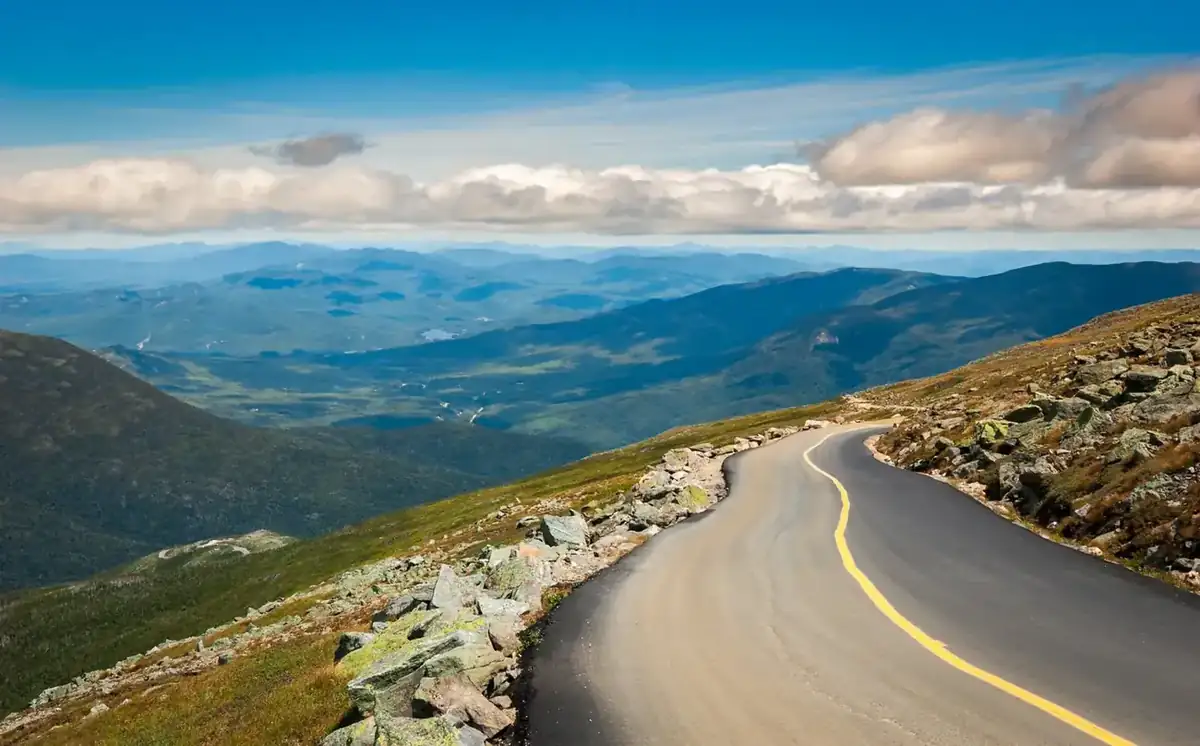
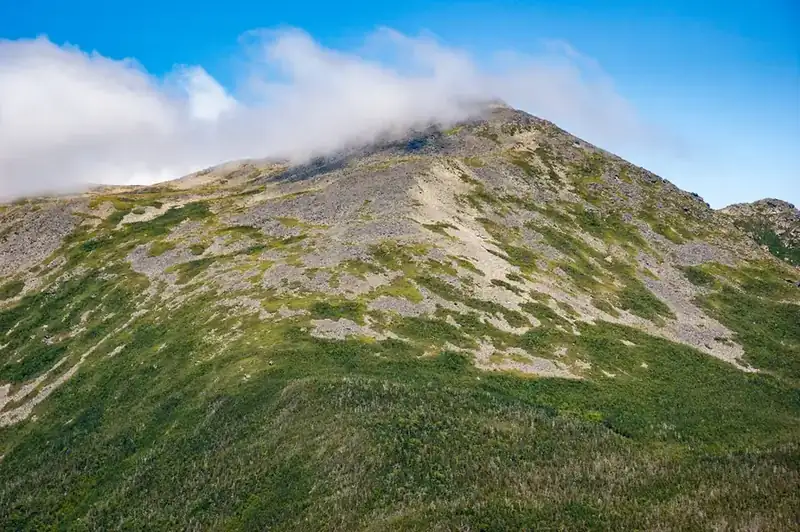
However, the White Mountains offer a stark contrast to these more famous ranges. The centerpiece is Mount Washington, a 6,288 feet peak which is easier to compare to western summits because its treeline is at 4,400 feet. This peak is famous for having the "worst weather in the world," boasting the second-highest surface wind speed ever officially recorded at 231 mph. Weather on the summit is unpredictable, harsh, and often cloud-covered. On clear days, however, the prominence of the peak allows mountaineers to view four other states, as well as Canada and the Atlantic Ocean.
Mount Washington is designated as a New Hampshire State Park, while most of the surrounding land is a national forest. There are several state parks in these mountains highlighting some of the most desirable tourist locations. The well-known 'Old Man on the Mountain' is among these protected sites, although most people may not know that this natural rock feature resembling a man's face collapsed in 2003. The face is displayed on commemorative state quarters and license plates, but rubble and interpretive signs are all that remain. Popular gorges, waterfalls, and rock formations contained within Franconia Notch and Crawford Notch State Parks are the easiest sites to explore at the base of the range.
A handful of attempts have been made to unify these lands into a National Park, including one recent campaign. Due to the decline of natural resource extraction in the mountains, regional citizens are exploring new revenue streams, many of which coincide with their love of the White Mountains. Time will tell if the economic benefits of a new park will be enough to persuade the people who live in the shadow of the mountains to create a White Mountains National Park.
The history of National Park Campaigns
The 1890s–1911 campaign (Society for the Protection of New Hampshire Forests, the AMC's Allen Chamberlain, Rep. John W. Weeks) deliberately sought a purchase-based national forest, not a park; the Weeks Act (1911) and the White Mountain National Forest (1918) followed, with wilderness added in 1964, 1975, 1984, and 2006. The National Park idea is a 21st-century phenomenon: a citizen "White Mountain National Park" website and FAQ (c. 2017–18) and George Wuerthner's June 2022 essay for an 810,000-acre White Mountain National Park and Preserve, backed by RESTORE: The North Woods.
- Distinct National Park attempts
- 0 historical; 2 modern advocacy proposals (c. 2017–18; 2022)
- Other designation attempts
- Weeks Act/national forest 1911–18; wilderness 1964–2006
Sources
- Christopher Johnson & David Govatski, Forests for the People: The Story of America's Eastern National Forests (2013)
- SPNHF centennial histories
- Wuerthner (2022)
- RESTORE materials
- 1901
SPNHF founded; 1903 — first federal bills for a White Mountain forest reserve; February 15/March 1, 1911 — Weeks Act (Rep. John W. Weeks, R-MA, born in Lancaster, NH); Allen Chamberlain (AMC) "one of the most vocal advocates." (Wikipedia, Allen Chamberlain; Shaheen release on S. Res. 679, 2010)
- 1914 / 1918
First 7,000 acres acquired; White Mountain National Forest proclaimed (May 16, 1918).
- 1964
Great Gulf Wilderness (Wilderness Act); 1975 — Presidential Range–Dry River (Eastern Wilderness Act); 1984 — New Hampshire Wilderness Act (Pemigewasset, Sandwich Range); December 2006 — New Hampshire Wilderness Act of 2006 (Wild River, Sandwich Range addition; Sens. Sununu/Gregg, Reps. Bradley/Bass).
- 2010
S. Res. 675/679 commemorate the Weeks Act centennial.
- c. 2017–2018
Citizen "White Mountain National Park" campaign website and FAQ (whitemountainnationalpark.wordpress.com) proposes a park-and-preserve keeping hunting and ATV use. (VERIFY author/dates)
- June 2022
George Wuerthner, "The Time Has Arrived for a White Mountain National Park," National Parks Traveler; RESTORE: The North Woods and the Rewilding Institute back an ~810,000-acre White Mountain National Park and Preserve. No delegation support; no bill.